We've been tinting cars in Miami-Dade since 1994, and "ceramic or carbon?" is the question we answer most at the counter. This is the same answer we give there — including the one spec that gets oversold, and the situations where the cheaper film is genuinely the right call.
What's the actual difference between carbon and ceramic tint?
The difference between carbon and ceramic tint is what's inside the film. Carbon tint is polyester film loaded with carbon particles that absorb light and heat. Ceramic tint uses microscopic, non-conductive nano-ceramic particles that are selective: they target infrared heat while letting more visible light through. The result: at the same shade, ceramic keeps the car cooler — and it keeps working when you go lighter.
| Carbon tint | Ceramic tint | |
|---|---|---|
| What's in the film | Carbon particles in layered polyester | Nano-ceramic particles in layered polyester |
| How it blocks heat | Absorbs a broad band of light and heat — rejection rises mostly as the shade gets darker | Targets infrared selectively — strong rejection even at lighter shades |
| Look from outside | Matte, true-black finish | Neutral tone; at the same shade most people can't tell them apart |
| Clarity from inside | Good | Excellent — the clearest view, especially at night |
| Signal interference | None (non-metallic) | None (non-metallic, non-conductive) |
How each film blocks heat
Heat through your windows comes from two parts of sunlight: infrared (IR), the invisible part you feel as warmth on your skin, and visible light, which also turns into heat once it hits your seats and dashboard. Carbon particles absorb both fairly evenly, so a darker carbon film rejects more heat and a lighter one rejects less. Nano-ceramic particles are tuned to infrared. That's why a ceramic film can look light and still perform — in ceramic, darkness and heat rejection are largely decoupled.
Look and appearance
Carbon has a matte, true-black finish that a lot of drivers prefer — no shine, no mirror effect. Ceramic at the same shade looks very similar from the street. Neither film is reflective, which matters because Florida caps how reflective tint can be (details in the law section below).
Optical clarity
From the driver's seat, ceramic generally gives the crispest view, which you notice most at night and in the rain. Carbon clarity is good — a big step up from dyed film — but if you're sensitive to glare or drive a lot after dark, ceramic is the more comfortable film to look through every day.
Ceramic vs carbon tint: side-by-side comparison
This is based on real install experience at our Kendall shop and on the typical performance ranges published by film manufacturers — not on the best-case number from a single brochure.
| Feature | Carbon Tint | Ceramic Tint |
|---|---|---|
| UV block | 99% | 99% |
| Infrared (IR) rejection | ~40–50% | Up to 99% on premium lines |
| Total solar energy rejected (TSER), typical | 45–60% | 55–80% |
| Heat rejection at lighter shades | Drops as the shade gets lighter | Stays strong |
| Signal interference | None | None |
| Color stability | Permanent — no fading | Permanent — no fading |
| Optical clarity | Good | Excellent |
| Price, sedan (Galaxi Sound) | ~$329 | ~$499 |
| Price, SUV (Galaxi Sound) | ~$379 | ~$549 |
| Typical lifespan in Miami | 10–15 years | 10–15 years |
| Galaxi Sound warranty | Lifetime | Lifetime |
| Best for | Garaged cars, tighter budgets | Outdoor parkers, luxury vehicles, ADAS |
IR rejection vs TSER: the spec that gets oversold
Ceramic film is often marketed as "blocks 99% of heat." That's not what the number means. There are three different measurements on a tint spec sheet, and only one of them tells you how hot your car will actually get:
- IR rejection (IRR) measures only the infrared part of sunlight. Premium ceramic films advertise up to 99% here; carbon is roughly 40–50%.
- TSER (total solar energy rejected) measures everything together — infrared, visible light and UV. This is the number that decides how hot the cabin gets.
- VLT (visible light transmission) measures how dark the tint looks. It's the number Florida law regulates, and on its own it tells you nothing about heat.
Infrared makes up about 53% of the sun's energy. The rest is mostly visible light, which also carries heat into the car. So a film can block nearly all of the infrared and still let a meaningful share of total solar energy through. That's why even top ceramic films typically land at 55–80% TSER, not 99%. Carbon films typically land at 45–60% TSER, with the darker shades at the top of that range.
Here's the practical takeaway: ceramic's advantage over carbon is real, but it's a difference of degree, not "cool car vs hot car." It's biggest at lighter shades — which is exactly what Florida requires on your front windows. For a deeper look at VLT, TSER and IRR, see our solar window tint guide.
Carbon window tint: what it is and how it performs
Carbon window film uses multiple layers of carbon particles embedded in polyester film. The carbon structure is what blocks both UV radiation and infrared heat — no metallic elements, which means zero interference with GPS, cell signal, or satellite radio.
The result is a film that blocks roughly 40–50% of infrared heat and typically 45–60% of total solar energy depending on shade, blocks approximately 99% of UV rays (UV is what fades your interior), and holds its color permanently. Unlike dyed films that fade purple under Miami sun, carbon stays black — indefinitely.
What carbon film is good at
- Real heat reduction over no tint or dyed film
- Permanent black color — never fades or turns purple
- No interference with GPS, SunPass, cell signal, or ADAS systems
- Matte finish preferred by many drivers over reflective films
- Best value-to-performance ratio in the mid-tier category
Where carbon film falls short
- Heat rejection depends heavily on darkness — and the front windows are exactly where Florida law makes you stay lighter
- Lower TSER than ceramic at the same shade, which you feel in full-sun lots
- For luxury vehicles with camera-based ADAS, we recommend ceramic for its optical clarity
Ceramic window tint: what it is and how it performs
Ceramic window film uses nano-ceramic particles — microscopic ceramic fragments suspended in the film layers. These particles are exceptionally effective at blocking infrared radiation while remaining non-conductive, which is why ceramic film has zero signal interference despite its higher heat rejection.
The key spec: premium ceramic film blocks up to 99% of infrared heat, which typically translates to 55–80% total solar energy rejected depending on product and shade. Because IR is separate from visible light, you can install a lighter ceramic shade (higher VLT) and still reject a lot of heat.
What ceramic film is good at
- Highest heat rejection available in non-metallic film — especially at legal, lighter shades
- Excellent optical clarity — the best view at night and in rain
- Zero signal interference (non-metallic, non-conductive)
- OEM-friendly on luxury vehicles: BMW, Mercedes, Range Rover, Porsche, Audi
- Compatible with factory heated rear windows, rain sensors and ADAS cameras
- Available from premium brands like 3M, Llumar, XPEL and SunTek
Where ceramic film falls short
- Higher upfront cost — about $150–$200 more than carbon for a full car
- If you park in a garage most of the time, the extra heat rejection delivers less value
- "Ceramic" varies a lot between product lines — a suspiciously cheap ceramic quote is often a lower-grade film, so ask for the brand, product line and TSER in writing
Which film handles Miami's heat better?
Miami-Dade's climate is one of the most demanding in the continental US for automotive window film. The combination of a high UV index (9–11 on summer days), year-round sun with very few overcast days, and open commercial parking lots (Doral, Kendall, Homestead) means cars bake for 8–10 hours straight with zero shade.
A car parked in full Miami sun for a couple of hours can reach 140–160°F inside. As we explain in our solar tint guide, a 35% ceramic film with around 70% TSER typically keeps a parked cabin somewhere around 110–120°F, where an untinted car goes past 150°F. Carbon lands in between, depending on how dark you go. Treat those as typical figures, not guarantees — paint color, glass area, and where exactly you park all move the number. What's consistent is the pattern: the gap between ceramic and carbon is widest on the front windows, where both have to stay at a legal, lighter shade.
For clients driving European or Japanese luxury vehicles — BMW, Mercedes, Audi, Lexus — ceramic film also matters from a technical standpoint. Factory heated rear windows, rain sensors, and ADAS cameras behind glass are designed to work with OEM glass. Ceramic film's non-metallic composition is fully compatible with these systems, with no risk to the manufacturer warranty under the Magnuson-Moss Warranty Act.
Ceramic vs carbon tint price by vehicle
Ceramic tint costs about $150–$200 more than carbon for a full car in Miami. These are Galaxi Sound's current prices — the same figures as our Miami window tinting cost guide:
| Vehicle | Carbon | Ceramic | Difference |
|---|---|---|---|
| Sedan (4-door) | ~$329 | ~$499 | ~$170 |
| SUV / crossover | ~$379 | ~$549 | ~$170 |
| Truck (cab only) | ~$299 | ~$449 | ~$150 |
| Luxury vehicle | ~$399 | ~$599 | ~$200 |
Two add-ons can apply to either film, and we quote them upfront:
- Luxury / ADAS supplement: $50–$150 for vehicles with factory ADAS cameras, rain sensors, heated rear windows or panoramic glass (extra prep and OEM compatibility checks)
- Old tint removal: $75–$150 depending on the number of windows and the age of the film
Every install at both price points includes full glass prep, an edge seal on every window, a cure check before you leave, the manufacturer certification sticker Florida requires, a combined VLT measurement on the front windows, and our lifetime warranty.
What the difference costs per year
Quality carbon and ceramic both typically last 10–15 years. Spread over that life, here's what each film costs per year — and what the ceramic upgrade really adds:
| Vehicle | Carbon per year | Ceramic per year | Extra for ceramic |
|---|---|---|---|
| Sedan | $22–$33 | $33–$50 | $11–$17 |
| SUV / crossover | $25–$38 | $37–$55 | $11–$17 |
| Truck (cab only) | $20–$30 | $30–$45 | $10–$15 |
| Luxury vehicle | $27–$40 | $40–$60 | $13–$20 |
On a sedan or SUV, that's roughly $1 to $1.50 a month for ceramic over carbon. The math changes if you'll sell the car soon: keep a sedan three years and the ceramic premium works out to about $57 a year. That's still easy to justify for a daily outdoor parker — and much harder for a car that lives in a garage.
Warranty and durability: carbon vs ceramic
On durability, the two films are closer than the marketing suggests. Both are color-stable for the life of the film — no fading, no purple. Both typically last 10–15 years in Miami. The film that fades and bubbles within a couple of summers is dyed film, not carbon or ceramic.
At Galaxi Sound, every tint install carries the same lifetime warranty, whichever film you choose. If your tint bubbles, peels or shifts color at any point while you own the car, we fix it free — you walk back into our Kendall shop, no forms, no fees, no expiration date.
| Carbon | Ceramic | |
|---|---|---|
| Color stability | Permanent | Permanent |
| Typical lifespan in Miami | 10–15 years | 10–15 years |
| Galaxi Sound warranty | Lifetime — bubbling, peeling, color shift | Lifetime — bubbling, peeling, color shift |
What actually decides how long tint lasts is usually the install, not the film type. The most common failure — edges lifting at the door seals — comes from rushed prep and skipped edge sealing. Reputable shops use premium manufacturer film from brands like 3M, Llumar, XPEL and SunTek; whichever shop you choose, ask which brand and product line is on your quote and get the warranty terms in writing.
Is ceramic or carbon tint legal in Florida?
Both are legal. Florida law (Statutes 316.2953 and 316.2954) regulates how dark tint is (VLT) and how reflective it is — not whether the film is carbon or ceramic. VLT is measured through the glass and film combined, so factory-tinted glass counts toward the limit.
| Window | Sedans / passenger cars | SUVs, vans & pickups |
|---|---|---|
| Windshield | Non-reflective tint above the AS-1 line only | Non-reflective tint above the AS-1 line only |
| Front side windows | Min 28% VLT · max 25% reflectance | Min 28% VLT · max 25% reflectance |
| Windows behind the driver | Min 15% VLT · max 35% reflectance | Min 6% VLT · max 35% reflectance |
This is also where ceramic earns its premium. The front side windows are the ones you look through, the ones the sun hits on your commute, and the ones where you can't go dark. Carbon's heat rejection depends on darkness; ceramic's doesn't. For the full rules, see our Florida window tint law guide and darkest legal tint in Florida.
Which one should you choose?
Choose carbon if:
- You park in a covered garage most days
- You're on a tighter budget and want a real upgrade from no tint or dyed film
- You drive mostly in the morning or evening with little midday sun
- You want the matte black look
- You plan to sell the car within two or three years
Choose ceramic if:
- You park outdoors in Miami sun daily (Doral offices, Kendall lots, MIA, open malls)
- You want strong heat rejection at a legal, lighter front-window shade
- You drive a luxury or European vehicle with ADAS, a heated rear window or rain sensors
- You drive a lot at night and want the clearest view
- You plan to keep the car long-term — or you already have carbon and want to upgrade
Frequently asked questions
Which is better: ceramic or carbon window tint?
For most Miami drivers, ceramic. At a similar shade it typically rejects 55–80% of total solar energy vs 45–60% for carbon, gives the clearest view, and keeps rejecting heat at the lighter shades Florida requires on the front windows. Carbon is the better value if your car is garaged, you mostly drive early or late, or you want to keep the cost down — at Galaxi Sound it is about $150–$200 less than ceramic depending on the vehicle. Both block 99% of UV, neither fades, and neither interferes with GPS or phone signal.
What is the difference between carbon and ceramic tint?
The difference is the particles inside the film. Carbon tint uses carbon particles that absorb light and heat, so its heat rejection rises mostly as the shade gets darker. Ceramic tint uses non-conductive nano-ceramic particles that target infrared heat specifically, so even a lighter ceramic shade rejects serious heat. Ceramic rejects more total solar energy and offers better optical clarity; carbon has a matte, true-black look and a lower price (about $329 vs $499 on a sedan at Galaxi Sound).
How much does ceramic vs carbon tint cost?
At Galaxi Sound in Miami, carbon tint is about $329 for a sedan, $379 for an SUV, $299 for a truck cab and $399 for a luxury vehicle. Ceramic is about $499 for a sedan, $549 for an SUV, $449 for a truck cab and $599 for a luxury vehicle — a difference of roughly $150–$200. Vehicles with ADAS cameras, rain sensors or heated rear glass may carry a $50–$150 supplement, and removing old tint costs $75–$150.
Is ceramic tint worth the extra cost in Florida?
For most Florida drivers who park outside, yes. Spread over a 10–15 year film life, the ceramic premium works out to roughly $10–$20 a year — about $1 to $1.50 a month on a sedan or SUV. In exchange you get more heat rejection at the same shade, which you feel most in full-sun parking lots. If the car lives in a garage or you plan to sell it within a couple of years, carbon is the smarter buy.
Does ceramic tint really block 99% of heat?
No. The up-to-99% figure some ceramic films advertise is infrared rejection only. Infrared is roughly half of the sun's energy; the rest is mostly visible light, which also warms the cabin. The more meaningful number is TSER (total solar energy rejected), which for ceramic film typically runs 55–80% depending on the product and shade. Carbon typically runs 45–60% TSER. These are typical ranges, not guarantees for any single film.
Carbon tint vs ceramic: when is carbon the better choice?
Carbon makes more sense when the car is garaged most of the day, when you mostly drive in the early morning or at night, when you want a matte black look for less money, or when you will sell the car soon. It still blocks 99% of UV, never fades, carries the same lifetime warranty at Galaxi Sound, and costs about $150–$200 less than ceramic.
Does ceramic or carbon tint interfere with GPS, phone signal or SunPass?
Neither does. Carbon and ceramic films are both non-metallic, so GPS, Bluetooth, cell signal, satellite radio, SunPass transponders and ADAS cameras work normally. Signal problems come from older metallized films, which Galaxi Sound does not install.
Does carbon window tint fade or turn purple?
No. Faded, purple tint is a dyed-film problem. Carbon and ceramic are both color-stable — the shade you choose is the shade you keep. If either film ever bubbles, peels or changes color, the Galaxi Sound lifetime warranty covers it.
Can I get a light ceramic shade and still block heat?
Yes — that is ceramic's biggest advantage. Because ceramic targets infrared instead of relying on darkness, a lighter shade still rejects a lot of heat. That matters in Florida, where front side windows must measure at least 28% VLT through glass and film combined. With carbon, heat rejection drops more as you go lighter.
How long do ceramic and carbon tint last?
Quality carbon and ceramic film both typically last 10–15 years in Miami when professionally installed. At Galaxi Sound both carry the same lifetime warranty: if the tint bubbles, peels or changes color while you own the car, we fix it free.
Is ceramic tint legal in Florida?
Yes. Florida regulates how dark and how reflective tint is, not the film technology. Front side windows need at least 28% VLT (glass and film combined) and no more than 25% reflectance. Windows behind the driver need at least 15% VLT on sedans and 6% on SUVs, vans and pickups, with no more than 35% reflectance. The windshield allows only non-reflective tint above the AS-1 line. 5% limo tint is not legal on any window without a medical exemption.
Will window tint void my car warranty?
No. Under the Magnuson-Moss Warranty Act, a manufacturer cannot void your warranty just because you added window tint unless it can show the tint caused the specific failure. Non-metallic films work with factory heated rear windows, rain sensors and ADAS cameras; on luxury vehicles with camera-based driver assistance we recommend ceramic for its optical clarity.
Can I upgrade from carbon or old tint to ceramic?
Yes. The old film has to come off first — we do not recommend tinting over existing tint. Removal costs $75–$150 depending on the number of windows and the age of the film, plus the ceramic price for your vehicle.
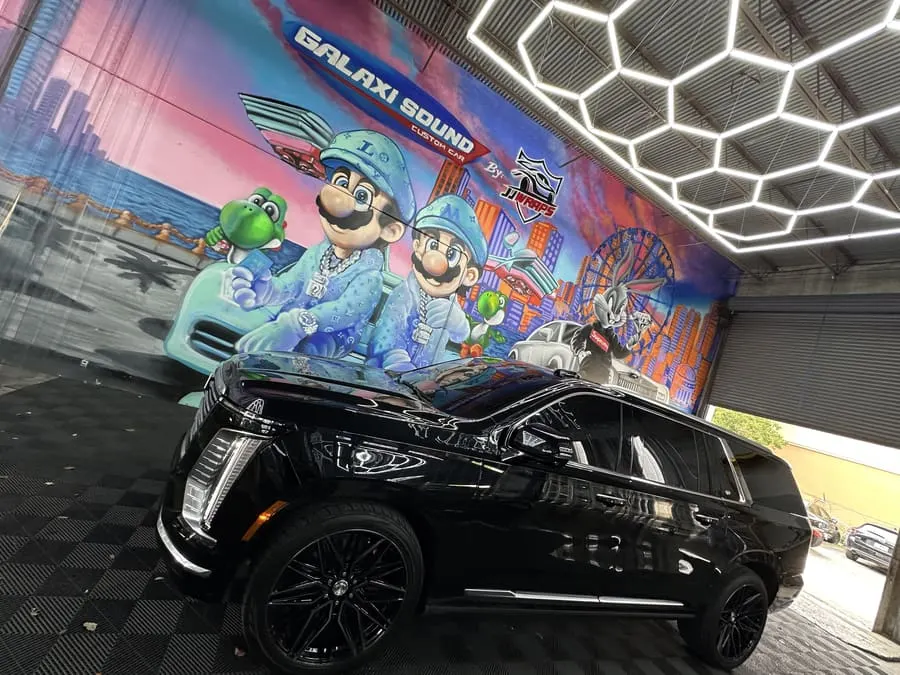
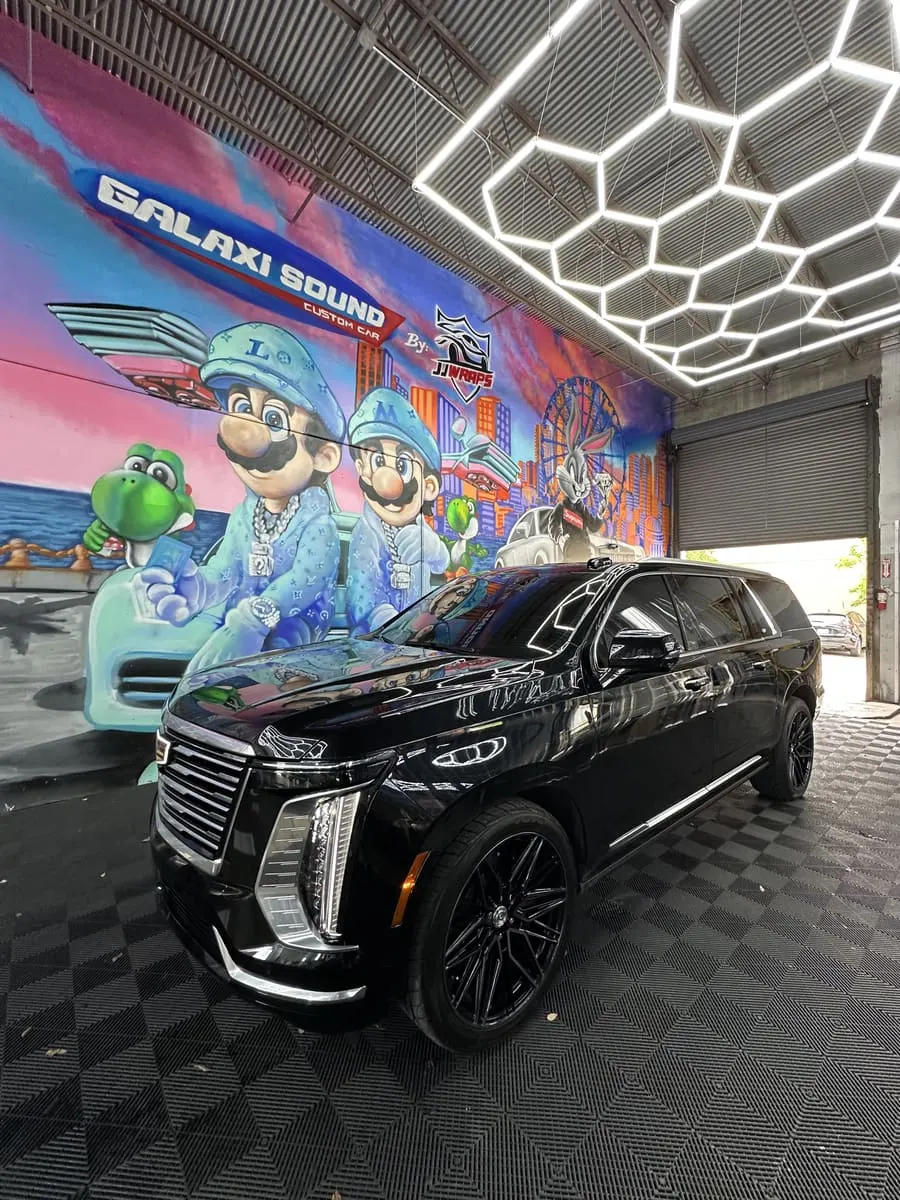
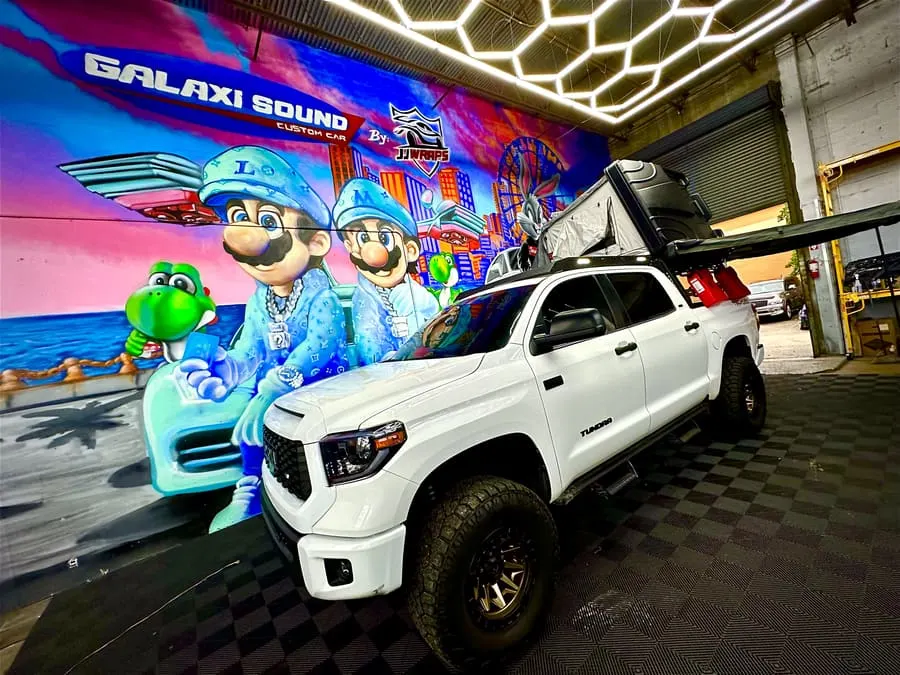
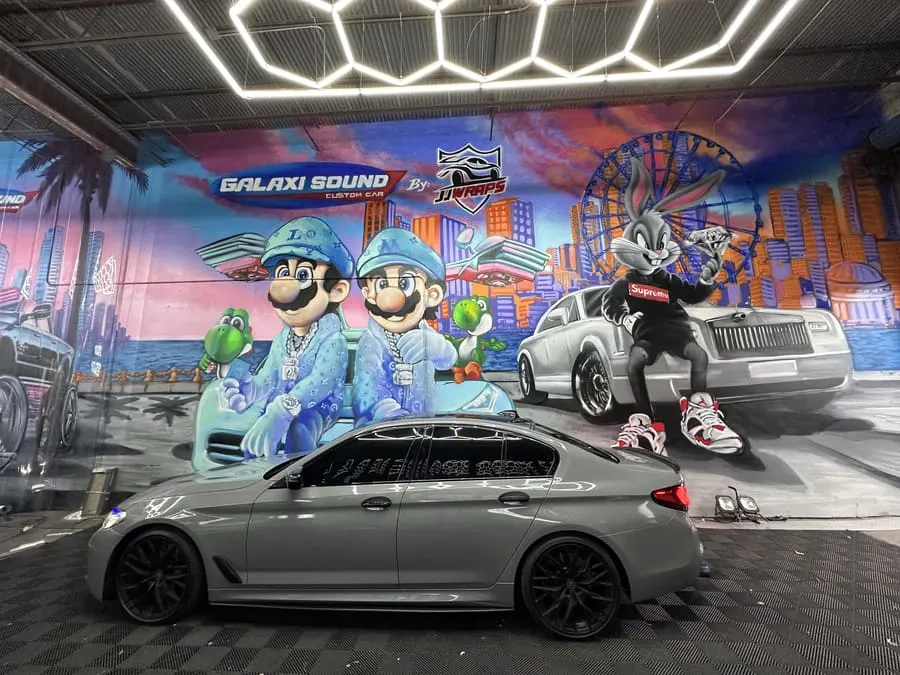
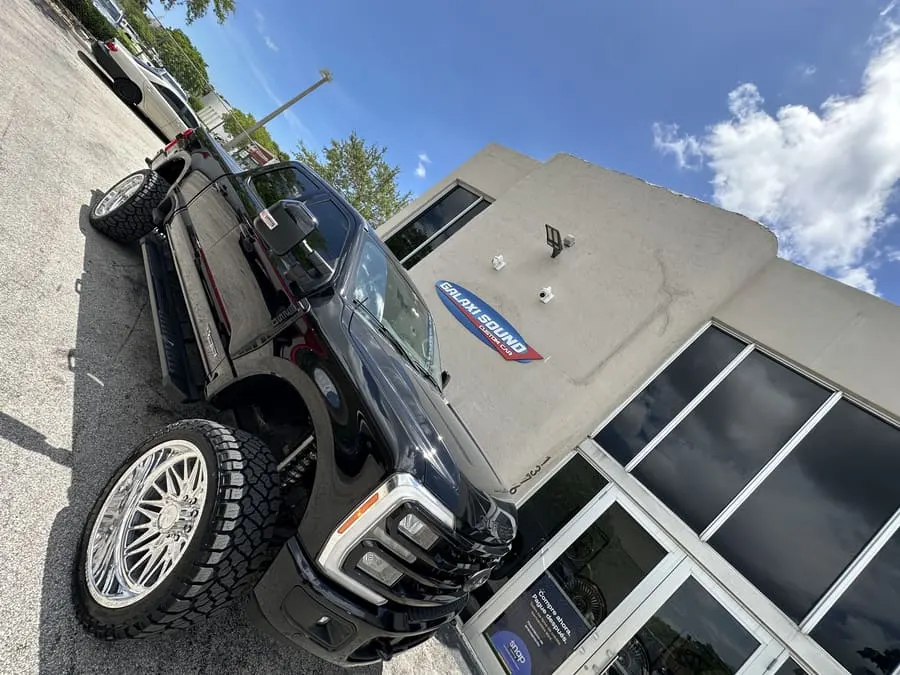
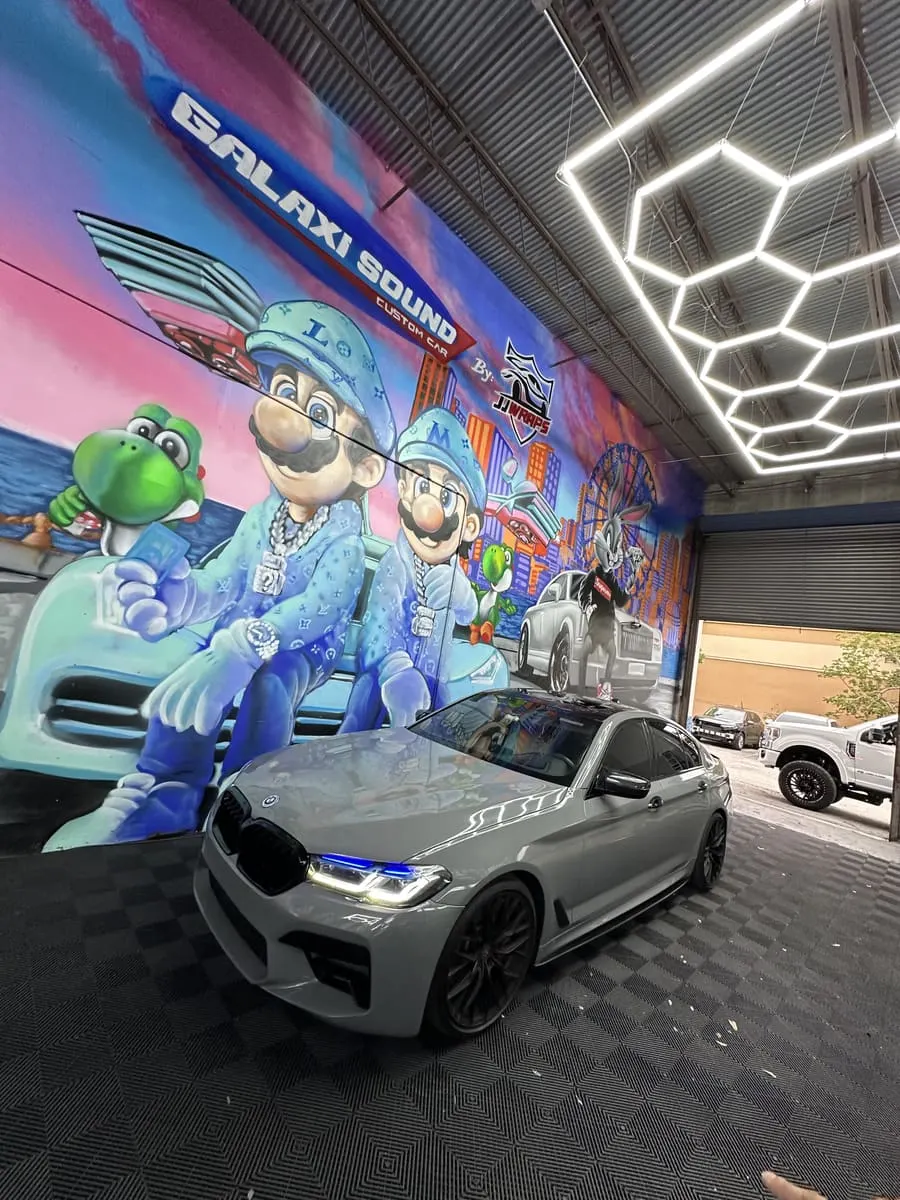
Real Installs
Ceramic & Carbon Tint Installs at Galaxi Sound
Real Miami install work — both films, from 30 years of experience. Every install carries a lifetime warranty and Florida-legal VLT verification.
Still not sure which film is right for your car?
Bring your vehicle to our Kendall shop (13767 SW 139th Ct, Miami, FL 33186) for a free in-person consultation. We'll measure your factory glass VLT, show you both films side-by-side, and quote both options. No pressure.
Call (786) 516-7353 — Free ConsultationRelated: Window Tinting Near Me in Miami · How Much Does Window Tinting Cost in Miami? · Solar Window Tint in Miami · Florida Window Tint Law 2026 · Window Tinting Kendall · Window Tinting Doral · Leer en español: polarizado cerámico vs carbono