What Florida window tint law actually says
Florida window tinting is regulated by Florida Statute 316.2953 (the side windows next to and in front of the driver) and 316.2954 (every window behind the driver, with a lower limit for multipurpose vehicles such as SUVs, vans and pickups). The law sets minimum visible light transmission (VLT) percentages for different windows and limits reflectivity. It does not ban window tinting — it defines what is legal.
VLT is measured as a percentage. Higher % = lighter tint. Lower % = darker tint. Florida's 28% front-window minimum means the film must let at least 28 out of every 100 units of visible light pass through. An officer can measure this with a tint meter during a traffic stop.
Important: VLT is measured on the combined glass + film. If your factory glass is already tinted (many are at 75–80%), a 35% film on top results in a combined VLT lower than 35%. Always measure the combination, not just the film.
Legal VLT limits by window position in Florida
| Window Position | Sedans & Coupes | SUVs / Vans / Pickups |
|---|---|---|
| Windshield | Non-reflective strip above AS-1 line only | Same |
| Front side windows | 28% VLT minimum | 28% VLT minimum |
| Rear side windows | 15% VLT minimum | 6% VLT minimum |
| Rear window | 15% VLT minimum | 6% VLT minimum |
The difference between the two columns comes from Statute 316.2954, which lets multipurpose passenger vehicles — SUVs, vans, minivans and pickups — go darker behind the driver (6%) than sedans and coupes (15%). Up front there is no difference: the 28% minimum applies to every vehicle type. All of these numbers are measured on the glass and film together, so factory glass counts. For the darkest setup that stays legal on each vehicle type, see the darkest legal tint in Florida.
Is 5%, 15%, 20% or 35% tint legal in Florida?
The percentage printed on a film box is the film alone. Florida enforces the combined reading of film and glass — roughly film VLT × glass VLT — so a 35% film on front glass that reads 80% ends up near 28%. Use this table as the starting point, then have the final result metered:
| Film shade | Front side windows | Rear — sedans & coupes | Rear — SUVs, vans & pickups |
|---|---|---|---|
| 5% (limo) | Illegal | Illegal | Illegal |
| 15% | Illegal | Usually fails — tends to meter below 15% | Legal on clear glass* |
| 20% | Illegal | Usually legal — must meter 15%+ | Legal on clear glass* |
| 35% | Borderline — must meter 28%+ | Legal | Legal |
| 50% | Legal | Legal | Legal |
*Many SUVs, vans and pickups come with dark factory privacy glass behind the driver, and film stacks on top of it. If that glass already reads 25%, a 20% film on it measures about 5% — below the 6% floor. We measure the bare glass before recommending a rear shade.
Reflectivity limits
Florida statute also limits how reflective tinted windows can be. For both passenger cars and multipurpose vehicles:
- Front side windows: must not be more than 25% reflective
- Rear side windows: must not be more than 35% reflective
Highly reflective or mirrored tints — regardless of their VLT — are illegal in Florida. This affects primarily metallic and chrome films. The carbon and ceramic films we install at Galaxi Sound are non-reflective and fully compliant with Florida's reflectivity limits.
Florida window tint medical exemption
Florida law provides a medical exemption for drivers or regular passengers with conditions that require protection from sunlight. Under the exemption, front side windows can be tinted darker than the standard 28% VLT minimum.
How to qualify
To receive a Florida medical tint exemption, you need a physician's or optometrist's written statement certifying that the patient requires protection from sunlight. Qualifying conditions typically include:
- Lupus (photosensitivity)
- Photosensitive porphyria
- Xeroderma pigmentosum
- Severe photophobia from certain medications
- Post-surgical eye conditions
The certification must be carried in the vehicle at all times. Law enforcement may request it during a traffic stop.
Penalties for illegal window tint in Florida
Illegal window tint is classified as a non-criminal traffic infraction under Florida law — not a moving violation, so it typically does not affect your driving record or insurance rates directly.
| Violation Type | Fine Range |
|---|---|
| Base infraction fine | $73 |
| With court costs | $73–$165 |
| Fix-it ticket issued | Yes (typically) |
| Moving violation? | No |
| Insurance impact? | Generally no |
A fix-it ticket requires you to remove the illegal tint and present the vehicle to law enforcement for inspection within a set period (usually 30 days). Failure to comply escalates the infraction. The practical cost of a fix-it ticket is the fine plus the cost of tint removal ($75–$150) and a legal reinstall.
How to check if your tint is legal
Quick self-check method
A rough visual check: stand outside your car in daylight. If you can clearly see the shapes of objects inside the car through the front side windows, the tint is probably in the legal range. If the interior looks very dark or you cannot distinguish objects inside, it may be too dark.
For a definitive check, the only accurate method is a calibrated tint meter measuring the combined VLT of glass plus film. Visual estimates are not reliable, especially for factory-tinted glass combined with an aftermarket film.
Miami-Dade: any extra tinting rules?
No. Miami-Dade County and the City of Miami do not have additional tinting ordinances beyond state law. Florida Statute 316.2953 preempts local regulation of window tint. The same rules that apply in Tallahassee apply on Brickell Avenue, Calle Ocho, and US-1 in Homestead.
However, Miami-Dade law enforcement — including Florida Highway Patrol, Miami-Dade Police, and city police departments — do enforce tint violations actively, particularly during traffic stops on SR-836, I-95, and the Palmetto Expressway.
Frequently asked questions
What is the legal window tint percentage in Florida? Florida law requires front side windows to allow at least 28% visible light transmission (VLT) under Florida Statute 316.2953. This is a combined measurement — your film VLT multiplied by your factory glass VLT. Windows behind the driver need at least 15% on sedans and coupes and at least 6% on SUVs, vans and pickups.
Can you tint your windshield in Florida? Partially. Florida law permits a non-reflective tint strip along the top of the windshield above the AS-1 line — approximately the top 6 inches. Full windshield tinting below the AS-1 line is prohibited. Clear heat-rejection films are not an exception — Statute 316.2952 only allows sunscreening material on the strip above the AS-1 line.
Does Florida require a sticker for tinted windows? Yes. Florida law requires a manufacturer's certification sticker to be permanently affixed between the film and the glass on each tinted window. The sticker identifies the film and its VLT. We apply the manufacturer sticker on every window we tint — it's part of a compliant install.
What happens if your tint fails a Florida inspection? Florida does not currently require a mandatory periodic vehicle safety inspection for most passenger vehicles (as of 2026). However, illegal tint can generate a fix-it ticket during a traffic stop, requiring you to remove the tint and present the vehicle for inspection. The cost typically runs $150–$300 to remove and reinstall legally.
Am I responsible for tint installed by a previous owner? Yes — the driver of the vehicle is responsible for compliance with Florida tinting law regardless of who installed the film. If you purchase a car with tint that doesn't meet Florida's 28% VLT standard on front windows, you're liable during any traffic stop. We recommend having any pre-owned vehicle's tint measured before driving it — we'll check it for free.
Is 30% tint legal in Florida? On front side windows, a 30% film usually fails: Florida measures combined glass + film VLT, and 30% film over factory glass typically reads below the 28% minimum. On rear side windows and the rear windshield, 30% is fully legal. Have the combined VLT metered before putting 30% up front.
Is 15% tint legal in Florida? Not on front side windows — 15% is well below the 28% minimum. Behind the driver it is legal on SUVs, vans and pickups (6% floor). On a sedan, 15% is exactly the legal floor for the combined reading, so a 15% film over factory glass usually meters below 15% and fails — 20% is the safe choice for a sedan's rear windows. See the darkest legal tint in Florida for the full window-by-window breakdown.
Is 5% tint legal in Florida? No. 5% limo tint is below every Florida limit — 28% on front side windows, 15% behind the driver on sedans and 6% behind the driver on SUVs, vans and pickups. It is only possible with a medical exemption. See the percentage table above.
Is 20% tint legal in Florida? Not on front side windows (28% minimum). Behind the driver, yes — 20% clears the 15% floor for sedans as long as the combined reading stays at 15% or more, and it is legal on SUVs, vans and pickups (6% floor).
What is the darkest legal tint in Florida? 28% VLT on front side windows. Behind the driver: 15% on sedans and coupes, 6% on SUVs, vans and pickups — all measured on glass + film combined.
Does Florida law change for SUVs, vans, or trucks? Only behind the driver. Front side windows need 28% on every vehicle. Statute 316.2954 lets multipurpose vehicles — SUVs, vans and pickups — go down to 6% on the windows behind the driver, versus 15% on sedans and coupes.
Is chrome or mirror tint legal in Florida? No. Florida caps reflectivity at 25% on front side windows and 35% on rear side windows — mirrored, chrome, and highly metallic films exceed those caps regardless of VLT. Non-reflective carbon and ceramic films are the compliant alternative.
Can you get pulled over just for tint in Florida? Yes — illegal tint is a primary offense. An officer can stop you solely because the front windows look too dark, then verify with a tint meter. The result is a $73–$165 fine and typically a fix-it ticket.
How much is a window tint ticket in Florida? Base fine $73, up to $73–$165 with court costs. Non-criminal: no points, generally no insurance impact. The real cost is the fix-it ticket — film removal ($75–$150) plus a compliant reinstall.
Florida-Legal Examples
Florida-Legal Tint Examples — Galaxi Sound Installs
Every install below meets Florida Statute 316.2953 — measured with a calibrated tint meter on combined glass + film VLT. Documented compliance carried in the vehicle.
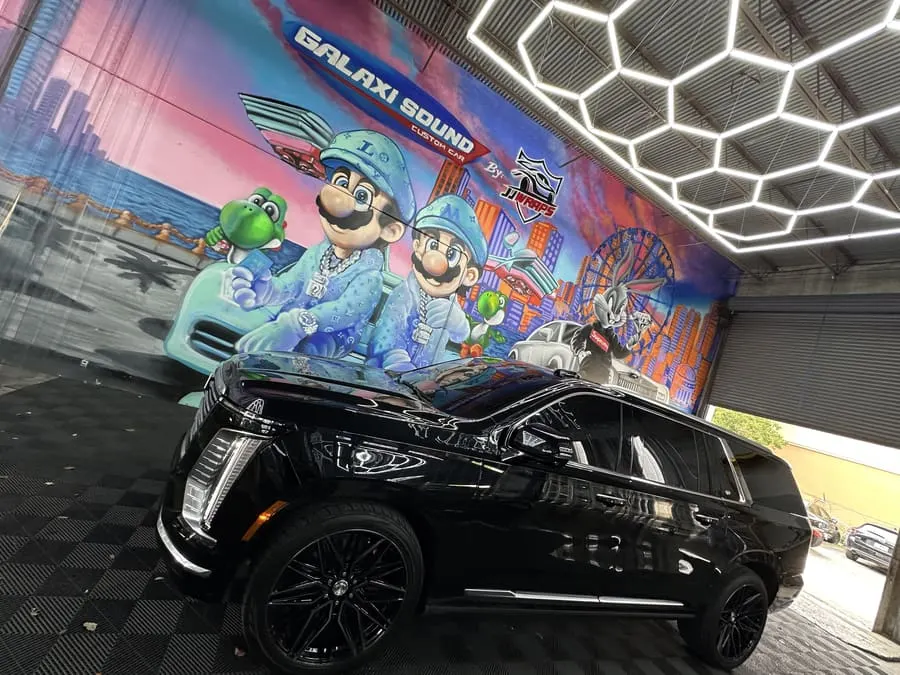
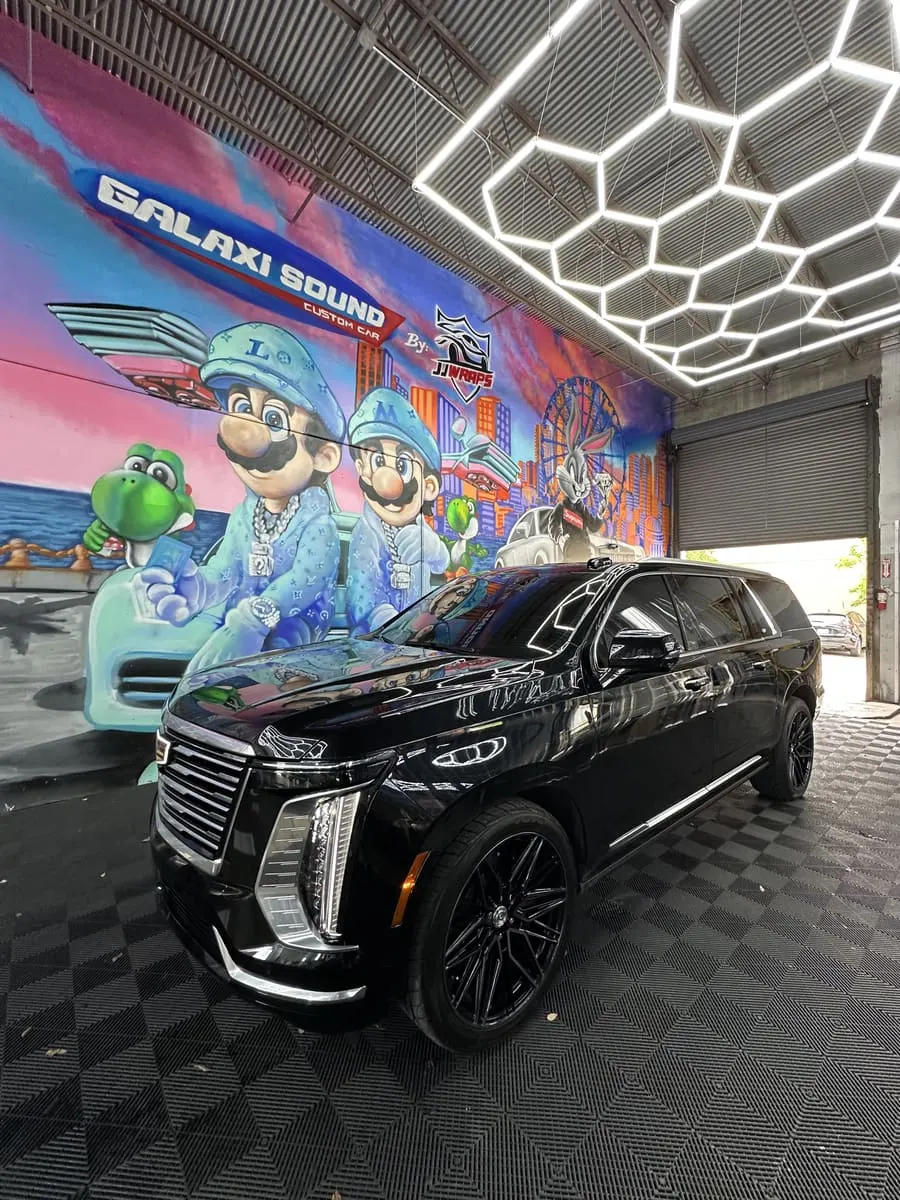
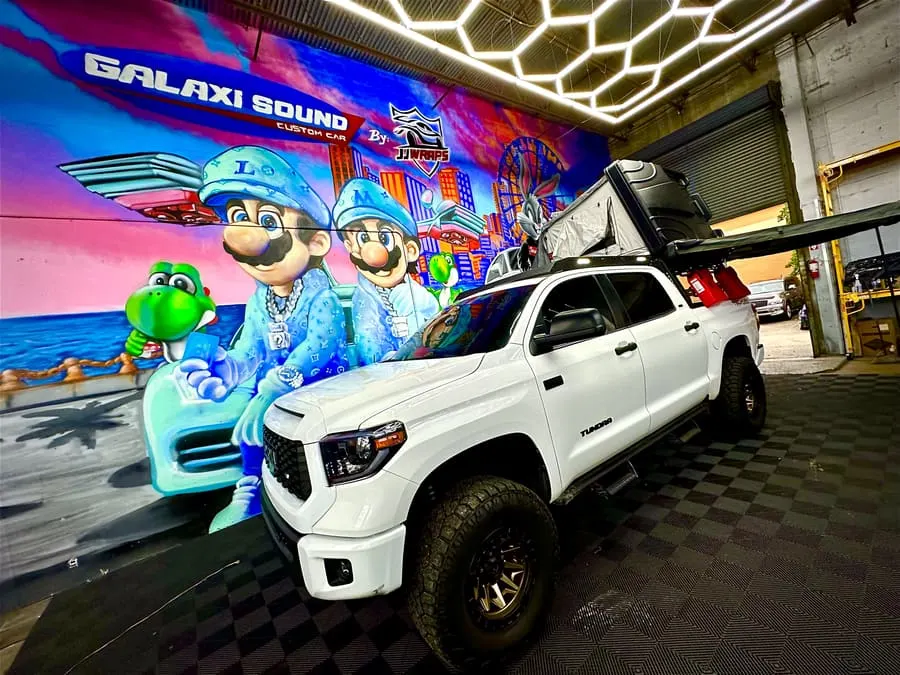

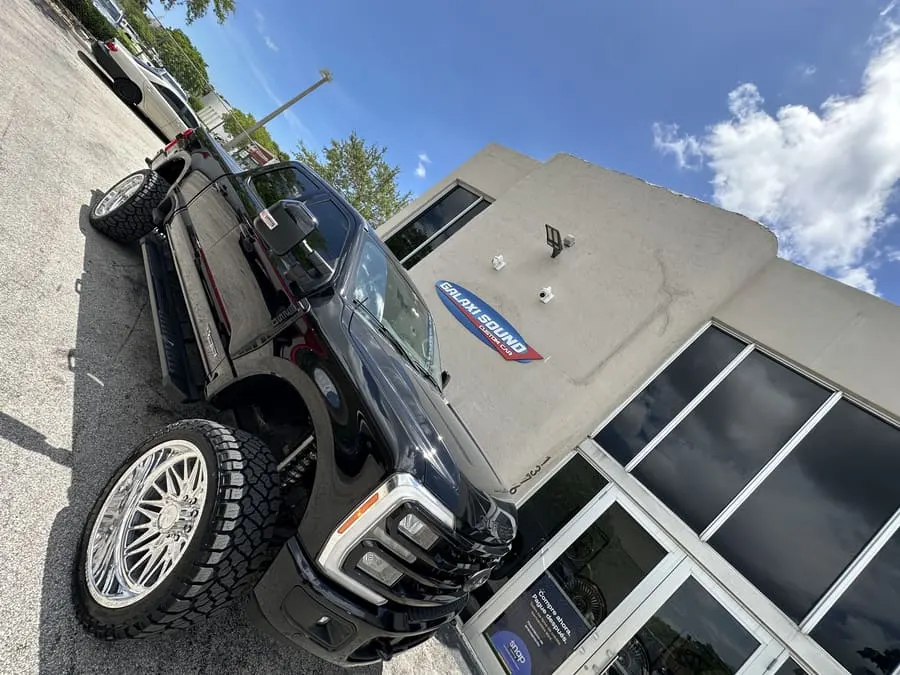
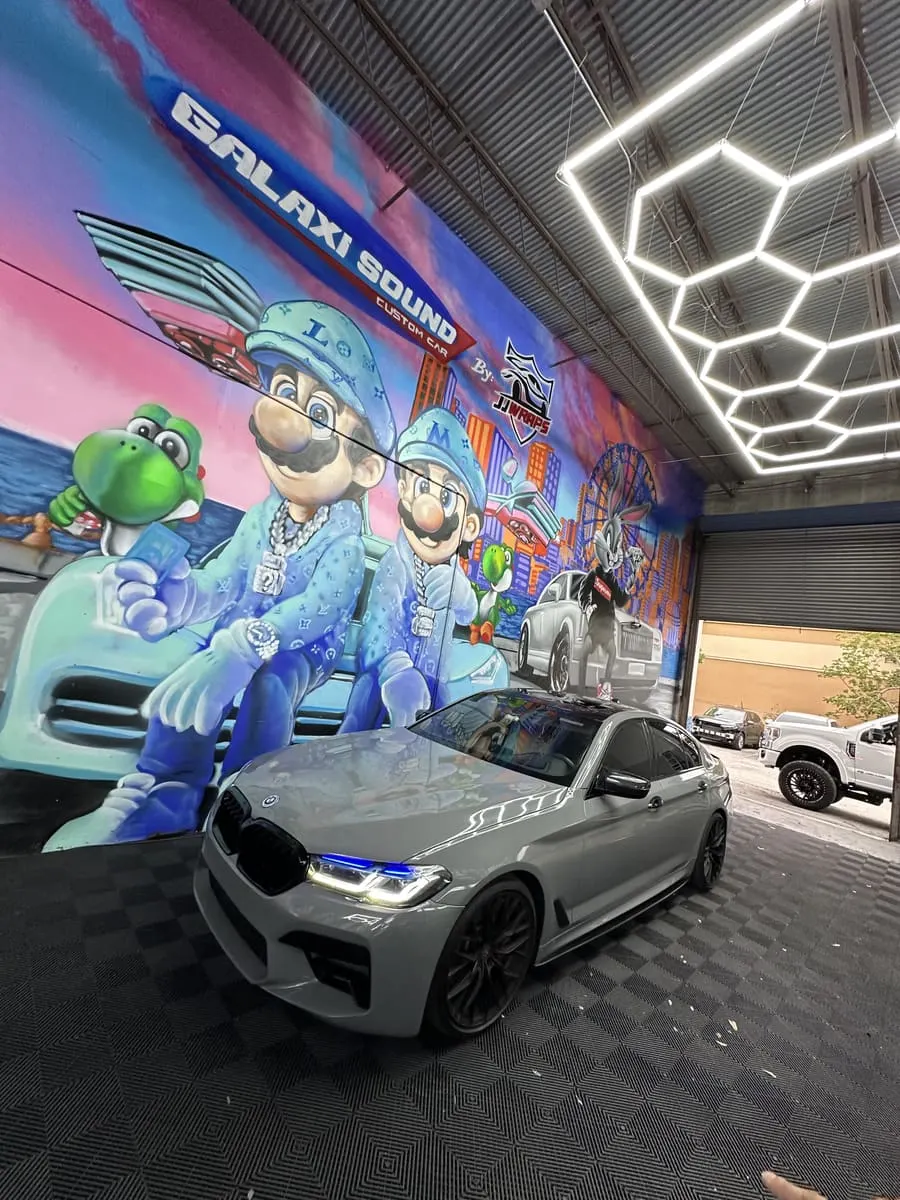
Need a Florida-legal install? Call (786) 516-7353 or visit our Kendall shop at 13767 SW 139th Ct, Miami FL 33186.
Related: Darkest Legal Tint in Florida · Window Tinting Near Me in Miami · Ceramic vs Carbon Window Tint · Window Tinting Cost Miami · Window Tinting Kendall · Window Tinting Doral · Window Tinting FAQ Miami · Versión en español
External authority: Florida Statute 316.2953 — Official Text · Florida Statute 316.2954 — Official Text