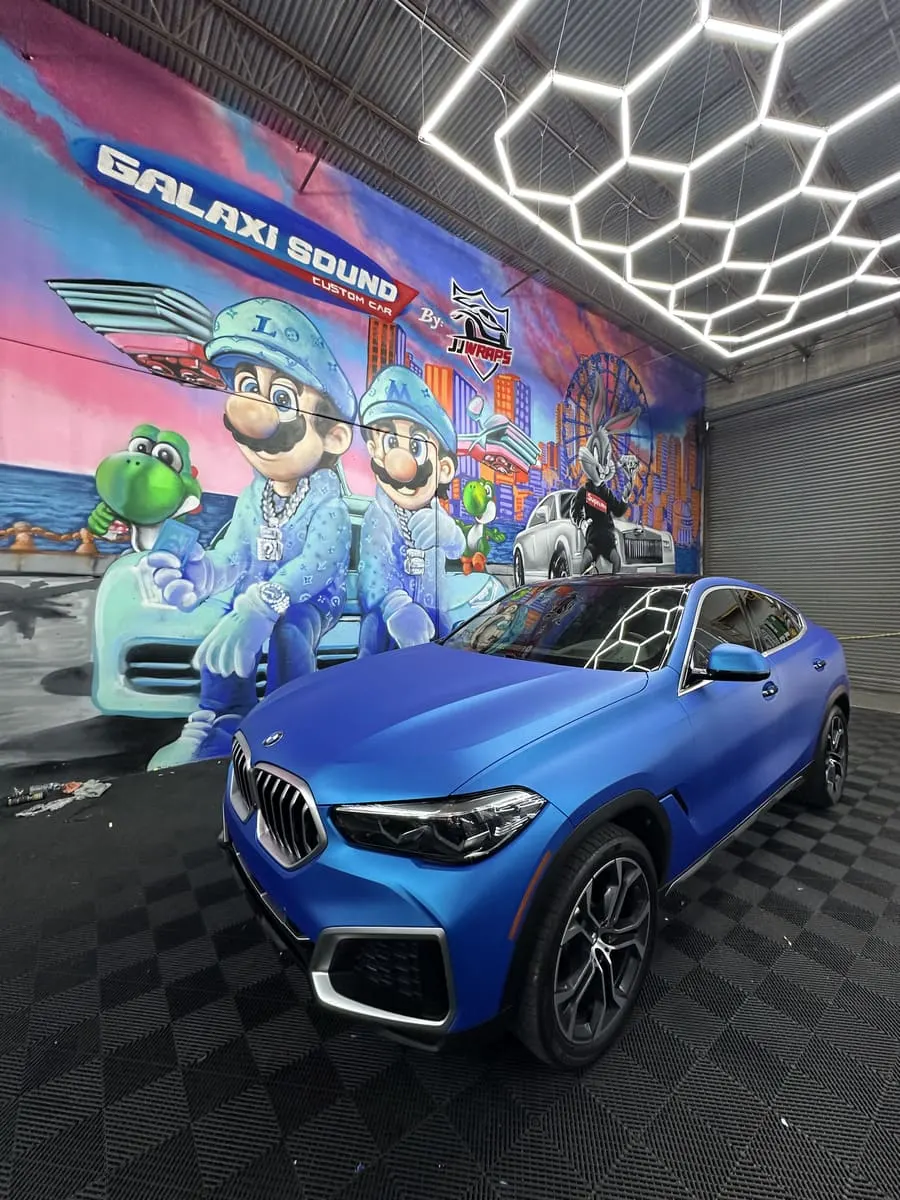
Miami is one of the densest concentrations of exotic cars in the United States. Brickell, Coral Gables, and Fisher Island see more Ferraris, Lamborghinis, McLarens, and Porsches per square mile than almost anywhere outside of Monaco. And a growing number of their owners are wrapping them.
Not because the factory paint isn't beautiful — but because wrapping an exotic is one of the smartest things you can do for it. This guide covers everything you need to know before putting vinyl on a six-figure car: which films work on complex curves, what the real costs look like in Miami, how South Florida's climate affects longevity, and how to separate a quality installer from one who'll damage a $20,000 paint job.
Why exotic car owners wrap — the case for vinyl
The original factory paint on an exotic car is irreplaceable in a practical sense. A full repaint on a Ferrari or Lamborghini can run $15,000–$40,000 from a qualified body shop — and it permanently affects resale value and collector interest. Protecting that paint from Miami's UV bombardment, coastal salt air, road debris, and parking lot contact is not optional if you care about the car's long-term condition or value.
Vinyl wrapping solves this while adding flexibility:
Paint preservation. A quality cast vinyl wrap acts as a sacrificial layer. UV, light scratches, bird droppings, brake dust, and minor abrasions hit the film — not the paint. When the wrap is removed after 5–7 years, the paint underneath is typically better preserved than an identical unwrapped car.
Color change without commitment. Factory paint is permanent. Vinyl is not. Wrapping in a custom matte, satin, color-shift, or chrome finish gives you the look you want today without affecting resale to a future buyer who wants the original color.
Lower cost than repaint. A full wrap on a Porsche 911 costs $4,000–$6,000. A full color-change respray costs $12,000–$25,000 minimum from a shop qualified to work on exotic finishes. The wrap is removable; the respray is not.
Resale protection. Documented factory paint under a wrap is a selling point, not a liability. Buyers of used exotics know what a clean paint history means.
Vinyl film types for exotic cars
Not every finish works on every car, and aesthetic choice should be guided by the vehicle's lines. Here's the full menu:
Gloss — The classic high-shine finish. Mimics factory paint at a different color. Works on any exotic. Easiest to maintain and clean. The most forgiving film for installers because imperfections are harder to see than on matte.
Matte — Flat, non-reflective finish. Extremely popular on exotics — it changes the character of the car more dramatically than gloss. More demanding to maintain (no machine polishing, careful product selection) but stunning on angular designs like Lamborghini and McLaren.
Satin — The middle ground between gloss and matte. Lower sheen than gloss, more depth than matte. Easier to maintain than matte while still looking unique.
Color-shift / Chameleon — Films that shift between two or more colors depending on viewing angle and lighting. High visual impact, higher cost ($1,500–$2,500 more than standard gloss for a full car). Extremely popular on hypercars in Miami.
Brushed metal / Carbon — Textured finishes that simulate brushed aluminum or carbon fiber. Popular on accents and partial wraps rather than full vehicles.
Chrome — Mirror-finish chrome vinyl is the most demanding film to install — zero margin for error — and the most dramatic result. Requires a highly experienced installer and costs 30–50% more than standard gloss. Not the right choice for a first-time wrap shop.
Cast vinyl vs. calendered vinyl — why it matters on exotics
This is the technical decision that determines whether your wrap looks professional in year 5 or starts failing in year 1.
Calendered vinyl is made by rolling warm vinyl through a series of rollers. It's cheaper, thicker, and has memory — meaning it wants to return to its flat shape. On flat surfaces it works fine. On the compound curves of an exotic car (Lamborghini door sills, Ferrari wheel arches, McLaren hood vents), it fights the installer, creates stress points, and shrinks or lifts within 12–24 months. Calendered film has no place on an exotic.
Cast vinyl is made by spreading liquid vinyl onto a casting sheet and allowing it to cure flat. It's thinner, more flexible, has virtually no memory, and conforms to complex curves without stress. Cast film from premium brands — 3M 1080 series, Avery Dennison Supreme Wrapping Film, Hexis HX30000, KPMF K75400 — is the only appropriate material for wrapping exotic vehicles.
A variation worth knowing: PPF wrap (paint protection film in a color or matte finish) uses a self-healing polyurethane film instead of vinyl. It offers superior impact protection — rocks, road debris, keys — while still allowing color change. PPF wrap costs significantly more ($5,000–$15,000+ for full-body exotic coverage) but is the highest level of paint protection available. See our full paint protection film guide for the comparison.
Exotic car wrap cost in Miami: full breakdown
Pricing for exotic car wraps is not standardized — it varies by vehicle, film choice, complexity, and whether the job is done right. Here's a realistic range for the Miami market:
| Vehicle / Scope | Standard Cast Vinyl | Color-Shift / Chrome | PPF Wrap |
|---|---|---|---|
| Sports car (Porsche 911, Corvette) | $3,500–$5,500 | $5,000–$7,500 | $6,000–$10,000 |
| Supercar (Ferrari, Lamborghini, McLaren) | $4,500–$7,500 | $6,500–$10,000 | $8,000–$15,000+ |
| SUV (Urus, Cayenne Turbo, G-Wagon) | $4,000–$6,500 | $5,500–$8,500 | $7,000–$13,000 |
| Partial wrap (hood, roof, accents) | $800–$2,500 | $1,200–$3,500 | $1,500–$4,000 |
What drives cost up on exotics specifically:
- Complex panel geometry — Lamborghinis and McLarens have angles and vents that require precision relief cuts and heat-forming skill
- Partial disassembly — proper edge finishing requires removing bumpers, mirrors, and trim so edges are tucked, not cut at visible lines
- Film cost — premium cast vinyl is 2–3× the material cost of entry-level film
- Chrome or specialty finishes — zero margin for error means more time per panel
What keeps prices suspiciously low: calendered film, no disassembly, edges cut at visible lines rather than tucked. You'll see it within 6 months when edges start lifting.
How Miami's climate affects your wrap
South Florida is harder on vinyl than almost any other US climate. Three factors matter:
UV intensity. Miami's UV index averages 9–11 (extreme) from April through October. Vinyl oxidizes and fades under prolonged UV exposure. Quality cast vinyl with UV inhibitors — installed by a shop that uses the right brand — is rated for this environment. Generic film is not.
Heat cycles. Temperature swings between an air-conditioned garage and a parked car in direct sun can exceed 100°F daily in summer. These thermal cycles stress the film's adhesive layer. Cast film handles this. Calendered film shrinks.
Humidity and coastal salt. Miami's salt air and humidity can creep under improperly finished edges. This is why edge tucking (not cutting at visible body lines) is critical on exotic wraps — a clean tuck prevents moisture ingress that causes adhesive failure.
How to extend wrap life in Miami:
- Store in a garage whenever possible (UV is the #1 killer)
- Hand wash only — automatic car washes with brushes damage matte and satin finishes
- Apply a ceramic coating designed for vinyl (not paint coatings) every 12–18 months
- Avoid high-pressure washing directly at panel edges
- Address any lifting edges immediately — small lifts become big peels
How to choose a wrap installer for your exotic
The installer matters more than almost any other factor. The same 3M 1080 film installed by an experienced technician vs. an inexperienced one produces completely different results.
Ask to see exotic-specific portfolio work. Any shop claiming experience with Ferraris, Lamborghinis, or McLarens should have documented examples. Look for clean edges, no visible seams on flat panels, and proper mirror, handle, and bumper finishing.
Ask what brand and series of film they use. The answer should be a named cast film series (3M 1080, Avery Dennison, KPMF, etc.). "Premium vinyl" or "high-quality film" without a brand name is not an acceptable answer for an exotic.
Ask if they disassemble panels. A yes — with specifics about which pieces — is the right answer for an exotic wrap. A no means edges will be cut at visible lines.
Get the warranty in writing. A quality shop stands behind their installs. What's their policy if an edge lifts in month 3? If there's no warranty documentation, treat it as a signal.
Consider starting with a partial. If you're unsure about a shop, have them wrap a single panel — a roof, hood, or trunk — before committing to a full car. Their work on a flat panel tells you a lot about their precision.
See our full car wrap service page for the complete list of finishes and vehicles we work with.
Frequently asked questions
How much does it cost to wrap an exotic car in Miami? Full vinyl wraps on exotic vehicles in Miami run $3,500–$7,500 for standard cast vinyl, $5,000–$10,000 for color-shift or chrome, and $8,000–$15,000+ for PPF wraps. Complex body geometry (Lamborghini, McLaren) and partial disassembly for proper finishing push costs toward the higher end of each range.
Is wrapping an exotic car a good idea? For most exotic owners, yes. A quality wrap protects factory paint that would cost $15,000–$40,000 to professionally repaint, allows color customization without affecting resale value, and is fully reversible. It's one of the highest-value modifications for a car you want to keep and eventually sell.
What vinyl film types work best on exotic cars? Only cast vinyl — not calendered. Premium brands like 3M 1080, Avery Dennison Supreme Wrapping Film, KPMF, and Hexis are purpose-built for complex curves. Finishes include gloss, matte, satin, color-shift, chrome, and brushed textures.
How long does an exotic car wrap last in Miami? 5–7 years with proper care: garage storage, hand washing, and periodic ceramic coating on the film. The main lifespan enemies in Miami are UV exposure, heat cycles, and salt air intrusion at poorly finished edges.
Will a wrap damage my exotic car's paint? A professional cast vinyl wrap will not damage factory paint when installed and removed correctly. It protects paint from UV, light scratches, and contaminants. Risk of damage comes from cheap adhesive film left on too long (beyond 7–8 years) or an inexperienced installer using improper primers on delicate finishes.
Do exotic car wraps require panel disassembly? Yes, for a quality finish. Door handles, mirrors, trim pieces, and often bumpers are removed so film edges can be tucked cleanly rather than cut at visible body lines. Any shop not doing this is cutting a corner that becomes visible within months.
Does Galaxi Sound wrap exotic and luxury cars? Yes — we've worked with premium and exotic vehicles for over 30 years in Miami-Dade. Contact us to discuss your vehicle before booking.
For paint protection without color change, see our Paint Protection Film (PPF) guide. Ready to discuss your exotic? Visit our car wrap service page or contact us directly.