Galaxi Sound is the paint protection film shop near you in Kendall, Miami — 13767 SW 139th Ct, Miami FL 33186, since 1994. PPF (also called clear bra) is a self-healing, optically clear urethane film that absorbs rock chips, road debris, UV damage, and salt air before they reach your paint. We are authorized XPEL Ultimate Plus and SunTek Ultra installers, applying computer-cut DAP patterns precision-fit to your exact make, model, and year — Tesla, Lamborghini, Porsche, Ferrari, BMW M, and daily-driven luxury alike. From $400 partial front to $9,500 full body. Bilingual EN/ES. 4.9★ / 54 Google reviews. Call (786) 516-7353.
What paint protection film (clear bra) is and what it protects against
Paint Protection Film (PPF) — also called clear bra — is a clear, flexible polyurethane film applied to painted surfaces. It acts as a physical sacrificial barrier: rock chips, road debris, fine scratches, and key scuffs hit the film instead of the paint. The film absorbs the damage and, in many cases, heals itself.
PPF is the only paint protection product that provides physical impact protection. Ceramic coating, wax, and paint sealant all protect against chemical damage (UV, bird droppings, water spots, oxidation) but provide no meaningful protection against rock chips. When a stone traveling at highway speed hits a ceramic-coated hood, the ceramic won't stop the chip. PPF will.
What PPF protects against:
- Rock chips from highway and freeway driving
- Road debris impacts (gravel, sand, construction material)
- Fine scratches from keys, shopping carts, and brushing contact
- Swirl marks from improper washing (the film can be polished just like paint)
- Bug splatter and bird droppings that etch painted surfaces
- Sand and grit abrasion in South Florida's climate
What PPF does NOT protect against:
- Deep scratches that cut through the film
- Collision damage
- Oxidation from unprotected exposed paint (areas without film coverage)
Self-healing film: how it works
Modern PPF (XPEL Ultimate Plus, SunTek Ultra, 3M Pro Series) uses a topcoat with elastomeric polymer properties. When fine scratches occur — from fingernail contact, light brush, or minor scuff — the topcoat's polymer chains flow back to their original position when heat is applied. In practice:
- Ambient temperature healing: most fine scratches heal on their own in Miami's heat within 20–60 minutes of direct sunlight
- Heat-accelerated healing: pouring warm water over a scratched area or using a heat gun heals deeper fine scratches in seconds
- What it heals: surface-level scratches in the film's topcoat — not cuts that go through the film itself
This is a meaningful advantage in Miami's environment. With ambient temperatures regularly above 85°F and paint surface temperatures well above 100°F in direct sun, fine scratches on PPF heal faster here than in most US climates.
How Long Does Paint Protection Film Last in Miami?
Quality paint protection film installed in Miami typically lasts between 5 and 10 years, with premium brands like XPEL Ultimate Plus carrying a 10-year manufacturer warranty against yellowing, delamination, hazing, and peeling. Miami's climate is one of the harshest in North America for automotive finishes — the city averages a UV index of 9 to 11 during peak months, nearly double the national average, and the combination of intense sunlight, salt air, and 90%+ summer humidity accelerates paint degradation on unprotected surfaces. UV-stable formulations used in our shop are engineered specifically for high-exposure climates like South Florida, maintaining optical clarity and self-healing performance throughout the warranty period.
Heat works in your favor here: Miami's ambient temperatures routinely exceed 90°F, which means the film's elastomeric polymer topcoat self-heals minor scratches passively — often overnight, without intervention. We recommend an annual inspection at our Kendall shop to catch edge lifting early and verify the film's hydrophobic topcoat is still performing. Budget films with no UV inhibitor package typically yellow and peel within 3 to 4 years in South Florida — brand selection is structural, not cosmetic.
Warranty Benchmark
XPEL Ultimate Plus carries a 10-year manufacturer warranty — the industry's longest — covering yellowing, cracking, hazing, and delamination. SunTek Ultra offers 10 years on gloss film and 7 years on matte/satin. Both are backed by Galaxi Sound's in-shop workmanship guarantee.
How Much Does Paint Protection Film Cost in Miami?
Paint protection film cost in Miami varies by coverage zone, vehicle size, and film brand. The table below reflects our installed pricing ranges at Galaxi Sound's Kendall shop. PPF installation in Miami-Dade tends to run 15–25% above national averages: precision computer-cut patterns, a humidity-controlled installation bay, and labor-intensive multi-panel fitting all contribute to a higher skilled-trade cost. Every estimate is itemized by zone before any work begins.
| Coverage Zone | What's Included | Price Range | Best For |
|---|---|---|---|
| Partial Front | Hood (partial) + front bumper | $400 – $700 | Budget-conscious daily drivers |
| Full Front-End | Full bumper + full hood + fenders + mirrors | $1,200 – $2,000 | Most popular — highway commuters |
| Full Front + A-Pillars | Full front-end + A-pillars + headlight lenses | $1,800 – $2,800 | Luxury & performance vehicles |
| Track Pack | Rockers + A-pillars + door cups + mirrors | $800 – $1,400 | Track days, stone-chip zones |
| Full Vehicle | All painted panels, roof, doors, trunk | $3,500 – $6,000+ | Exotics, collectibles, max protection |
Prices vary by vehicle make, model, body complexity, and film grade selected. Free itemized quote before any work begins — no surprises at pickup. Call (786) 516-7353.
PPF Brands We Install: XPEL, SunTek & 3M
Not all paint protection film is the same material. The brand determines UV stability, self-healing response time, anti-yellowing performance, and manufacturer warranty terms. At Galaxi Sound we install three industry-leading clear bra films — each optimized for South Florida's UV and humidity conditions. We recommend the right brand based on your vehicle, coverage zone, and budget.
XPEL Ultimate Plus
The industry benchmark. Elastomeric polyurethane with an aggressive self-healing topcoat, near-zero orange-peel texture, and a 10-year manufacturer warranty. Our top recommendation for Miami's UV load.
SunTek Ultra
10-year gloss warranty, 7-year on matte/satin. Hydrophobic topcoat beads water and repels contaminants. Strong anti-yellowing chemistry — well-suited to South Florida's salt and humidity environment.
3M Pro Series
Trusted OEM-grade film with consistent optical clarity and a proven adhesive system. Suitable for full-vehicle coverage on daily drivers where a lower price point is a priority without sacrificing core protection.
All three brands are applied using computer-cut DAP (Design Access Program) patterns specific to your vehicle's exact make, model, and year. No blade ever contacts the vehicle's surface during trimming — every cut is made on the film before it reaches the car.
Coverage options: partial vs full-body PPF
| Coverage | What's included | Best for |
|---|---|---|
| Front-end | Front bumper, hood, headlights, mirrors | Most drivers — highest impact zone |
| Partial front | Bumper + hood leading edge only | Budget-conscious protection |
| Full front | Front bumper, full hood, fenders, mirrors, A-pillars | Highway commuters, new vehicles |
| Full body | All painted panels | New luxury vehicles, long-term ownership, collectors |
| Custom zones | Any combination of panels | Specific damage history or high-risk areas |
Most popular in Miami: Full front (bumper, hood, fenders, mirrors). This covers the panels that take the most highway debris impact. The hood is the most common place for rock chips on Miami's I-95 and Palmetto — where road construction is essentially permanent.
PPF vs ceramic coating: when you need which
These two products protect against different threats. They are not competing products — they're complementary.
| Ceramic Coating | PPF | |
|---|---|---|
| Rock chips | No protection | Physical barrier |
| UV / oxidation | Excellent | Good (UV-stable film) |
| Water spots | Hydrophobic effect | Hydrophobic topcoat |
| Scratch resistance | Light surface resistance | Self-healing |
| Chemical protection | Excellent | Good |
| Durability | 2–5 years | 7–10 years |
| Removable | No (cuts away) | Yes, professionally |
The best protection system: PPF on high-impact zones (front bumper, hood, mirrors), ceramic coating over the PPF and on all remaining paint. PPF handles physical impacts; ceramic handles UV, chemical, and surface contamination across the entire vehicle.
Who Should Get PPF in Miami?
Paint protection film is the right investment for any vehicle owner who drives in South Florida's conditions — but the case is especially strong for these four situations.
New Vehicle Owners
The best time to install PPF is before the first chip. A new car's paint is in factory condition — no paint correction needed, adhesion is optimal, and you lock in that condition for the life of the film. We regularly install PPF the same week customers take delivery.
Leased Vehicles
PPF is fully reversible — it removes cleanly without damaging the paint underneath. On a leased vehicle, a single end-of-lease chip assessment can cost more than a partial PPF package. Our technicians install and remove film without leaving adhesive residue or paint damage.
Daily Drivers on I-95 / Palmetto
Miami's highways generate constant road debris. If your commute includes I-95, SR-836, or the Palmetto Expressway, your front end takes daily impact. A full front-end package eliminates cumulative chip damage that would otherwise require repainting within a few years.
Exotic & Luxury Vehicles
On a vehicle where a single-panel repaint runs $2,000–$5,000, full-body PPF is straightforward risk management. We regularly protect Ferrari, Lamborghini, Porsche, McLaren, and high-end German and Japanese performance vehicles. Full-body coverage preserves resale value and OEM paint integrity.
30 Years of Precision — Galaxi Sound's Installation Standard
Galaxi Sound has operated in Kendall, Miami since 1994 — three decades before PPF became mainstream, our technicians were building systems to competition tolerances for IASCA events where millimeter-level precision determined a championship. That same obsession with fit and finish defines how we approach every PPF installation today.
Our installation bay is humidity-controlled — a non-negotiable in Miami-Dade, where ambient humidity above 70% causes adhesion failures and micro-bubbles during film curing if the environment is not managed. Every vehicle is staged in a climate-controlled environment from surface prep through final squeegee, ensuring the film bonds cleanly and lies flat from day one.
We use computer-generated DAP patterns cut off the vehicle entirely. No technician blade touches your paint during pattern trimming. Edges are wrapped rather than cut at panel lines wherever geometry allows, eliminating the most common source of edge lifting in Miami's heat cycles.
In Miami Since
1994
30 continuous years of service in Kendall
Customer Rating
4.9★ / 48 reviews
Google verified · Kendall, Miami FL
Installation Environment
Humidity-controlled bay
Required for bubble-free curing in South Florida conditions
Why Miami roads make PPF more valuable
Miami-Dade's road conditions create more paint chip risk than the average US city:
- Construction: I-95, Palmetto Expressway, Turnpike, and SR-836 have permanent or long-term construction zones with loose gravel and debris
- Road surface quality: portions of Miami-Dade's road network have surface conditions that generate more debris than well-maintained northern highways
- Traffic density: stop-and-go traffic on high-debris roads means vehicles spend more time in debris impact zones than at speed
- Truck traffic: heavy truck use on US-1, NW 7th Ave, and industrial corridors increases debris spread
A new vehicle driven on Miami highways without front-end PPF will typically have visible hood chips within 12–18 months of regular commuting.
PPF installation process
Step 1: Surface preparation — paint is washed, decontaminated (clay bar + iron decontamination), and inspected. Any existing chips or scratches are documented. The install area must be absolutely clean — any contamination trapped under PPF will be visible.
Step 2: Computer-cut patterns — we use DAP (Digital Application Program) software that contains pre-cut patterns for every make and model year. The film is cut precisely to fit each panel with correct overlap and seam placement. No cutting on the vehicle.
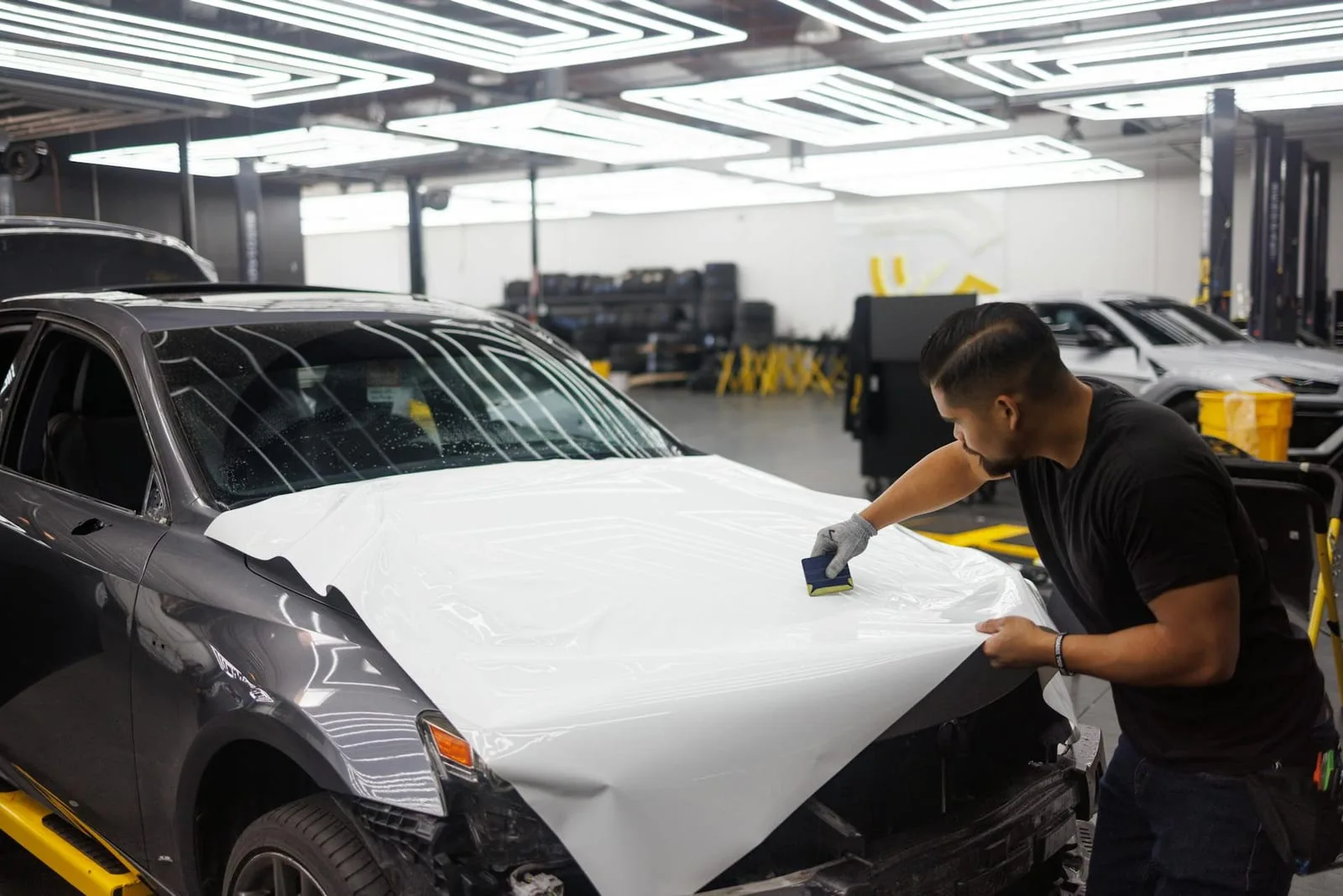
Step 3: Application — the film is applied wet using an application solution, positioned precisely, and squeegeed from center to edges to eliminate all air and solution bubbles.
Step 4: Edge sealing — edges are carefully tucked or wrapped where possible to prevent lifting. Exposed edges are sealed for longevity.
Step 5: Cure period — full cure takes 24–48 hours. During this time, minor fogging or milkiness is normal as the installation solution evaporates.
Serving Kendall, Doral, Coral Gables & Greater Miami-Dade
Galaxi Sound is located at 13767 SW 139th Ct, Kendall, Miami FL 33186, minutes from the Florida Turnpike and the Palmetto Expressway — making us the most accessible full-service PPF shop for drivers across Miami-Dade County. We have served South Florida since 1994, and our customer base spans every major corridor: Brickell, Coconut Grove, and Coral Gables to the east; Doral, Hialeah, and Medley to the north; Pinecrest, Palmetto Bay, Cutler Bay, and Homestead to the south. Customers from Miami Beach and the Brickell financial district regularly make the drive to Kendall specifically for our precision installation standard.
También Instalamos PPF en Español
En Galaxi Sound hablamos tu idioma — literalmente. Nuestro equipo en Kendall, Miami atiende en español e inglés, y podemos explicarte cada detalle del proceso de instalación de película protectora de pintura sin que se pierda nada en la traducción. Desde elegir la zona de cobertura correcta para tu vehículo hasta entender la diferencia entre marcas como XPEL y SunTek, te guiamos paso a paso. Llámanos o visítanos para recibir tu presupuesto gratis — sin compromiso, sin letra pequeña.
Frequently asked questions
Does PPF prevent rock chips in Miami? Yes. PPF is the only paint protection product that physically stops rock chips. On Miami's I-95 and Palmetto, PPF on the front bumper and hood is the most effective prevention available. The polyurethane film absorbs the impact energy that would otherwise permanently chip your paint.
How long does PPF last in Miami? Quality PPF from XPEL Ultimate Plus or SunTek Ultra lasts 5–10 years in Miami, with 10-year manufacturer warranties available. Miami's heat actually helps self-healing — the film recovers fine scratches faster in warm temperatures. Annual inspections at our Kendall shop keep the film performing through its full warranty period.
Can PPF be removed without damaging paint? Yes, when removed by a professional using heat and proper technique. Never peel PPF cold or dry. When a quality film is professionally installed and removed before the end of its service life, the factory paint underneath is fully protected and undamaged.
Should I get PPF or ceramic coating on my new car? Ideally both — PPF on high-impact zones and ceramic on the rest. If you must choose, get PPF on the front end first: it prevents chip damage that would need to be repaired before ceramic can be applied. Chips cannot be removed by ceramic coating.
Does PPF require maintenance? Minimal. Hand wash with pH-neutral soap. Avoid harsh chemicals near film edges. An annual inspection for edge lifting is recommended. The self-healing topcoat handles most minor scratches automatically.
What is clear bra — is it the same as paint protection film? Yes, clear bra and paint protection film are the same product. "Clear bra" is a legacy trade name from early installations where film was applied primarily to the front bumper area. Both terms refer to the same self-healing polyurethane film we install at our Kendall shop.
Is paint protection film worth it for a leased vehicle in Miami? Yes — and it is one of the strongest financial cases for PPF. The film is fully removable: at the end of your lease, our technicians peel it off cleanly with no adhesive residue and no damage to the factory paint. A single chip or scratch assessment at lease return in Miami can cost $300–$800 per panel. A partial front PPF package often costs less than two panels of damage correction.
Does PPF protect against rock chips on I-95 and the Palmetto Expressway? Yes — rock chip protection is the primary engineering purpose of paint protection film. The polyurethane layer physically absorbs and disperses the impact energy from road debris. Miami's major expressways — I-95, the Palmetto (SR-826), SR-836, and the Florida Turnpike — generate heavy truck traffic and construction debris that make rock chip risk higher than most US metro areas.
How much does paint protection film cost at Galaxi Sound? PPF pricing at our Kendall shop starts at $400–$700 for a partial hood and bumper package and scales to $3,500–$6,000+ for full-vehicle coverage. See our complete pricing table above for all coverage zones. Every quote is itemized by zone before any work begins — we do not charge for the estimate. Call (786) 516-7353 or visit us at 13767 SW 139th Ct, Kendall, Miami FL 33186.
Recent Work
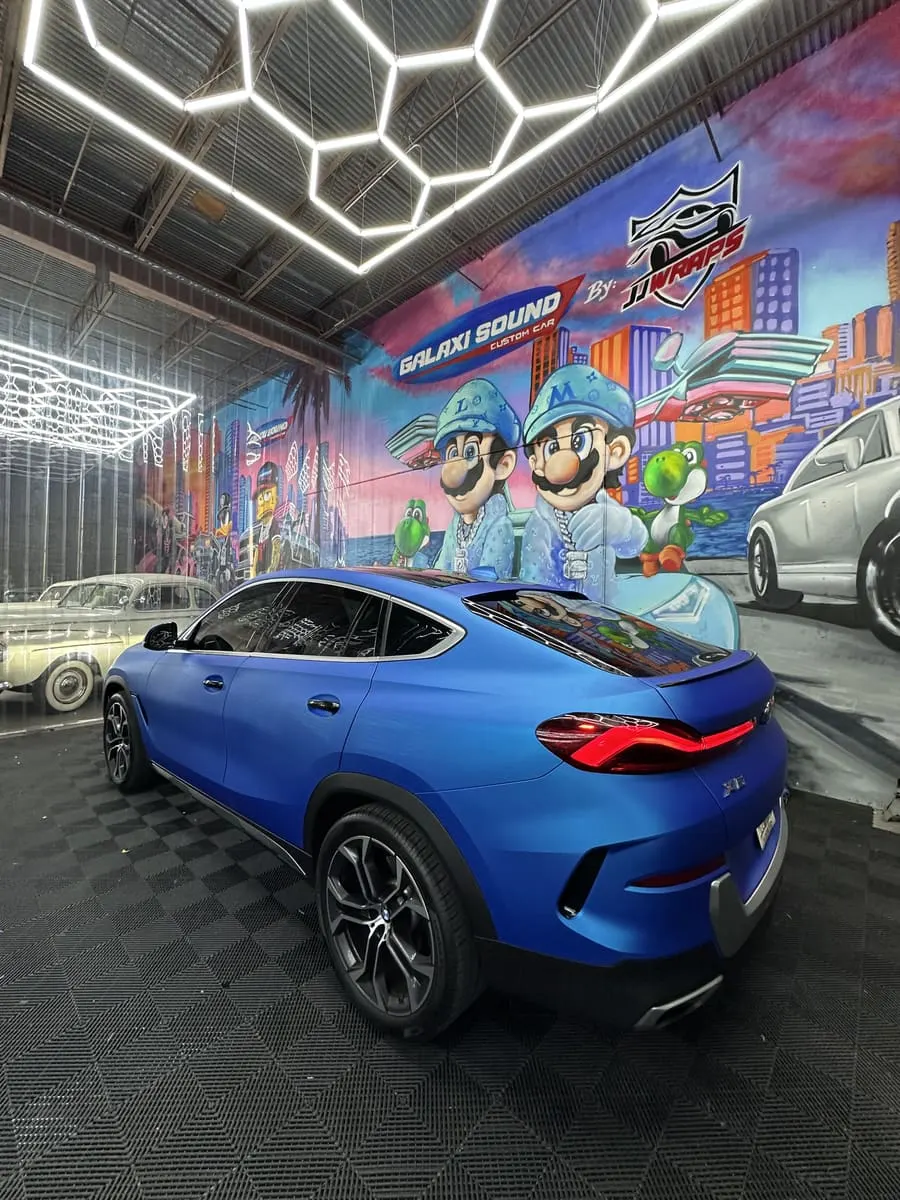
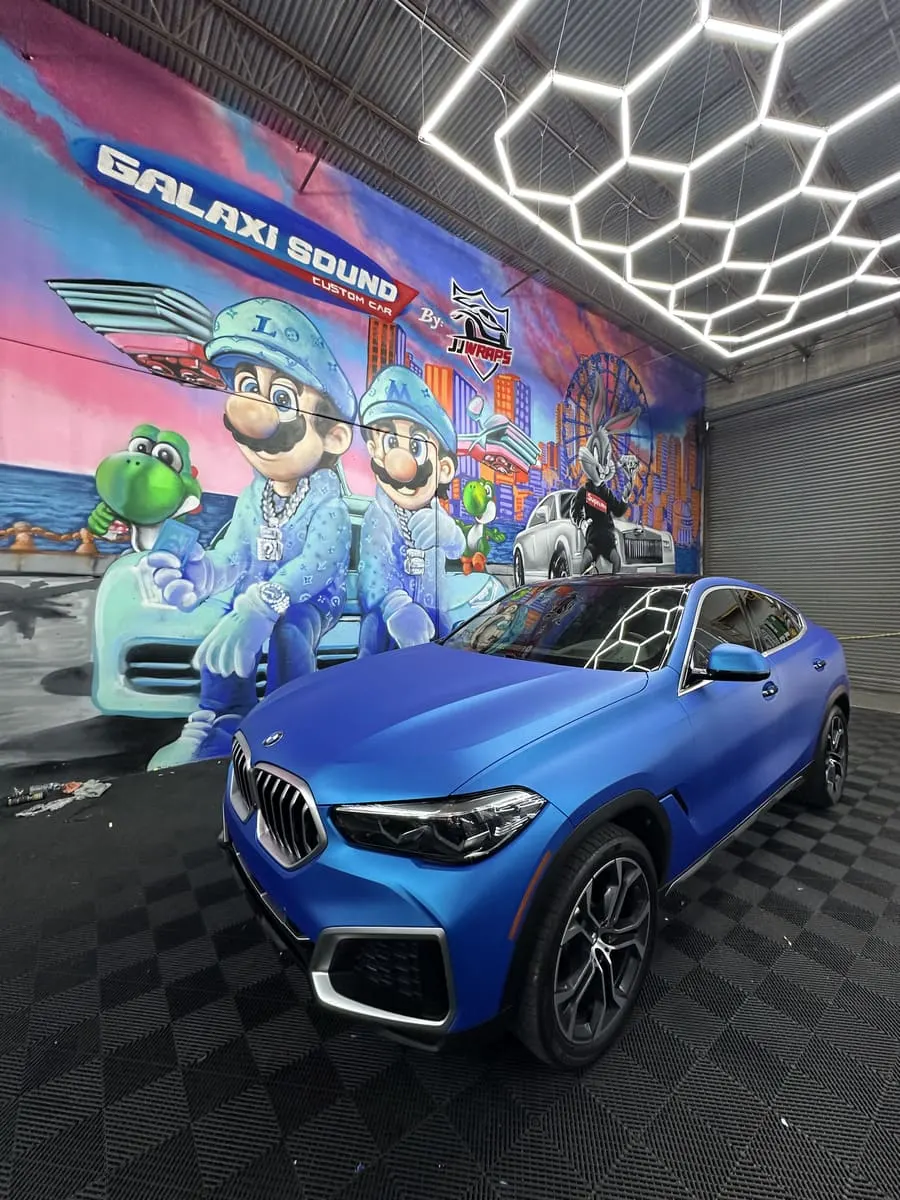
Galaxi Sound PPF & Wrap Portfolio
Related: Car Wrap Near Me in Miami · Car Detailing Miami · Ceramic Coating Near Me · Car Spa · Ceramic Coating vs Paint Sealant · Paint Correction Miami · Window Tinting Near Me in Miami