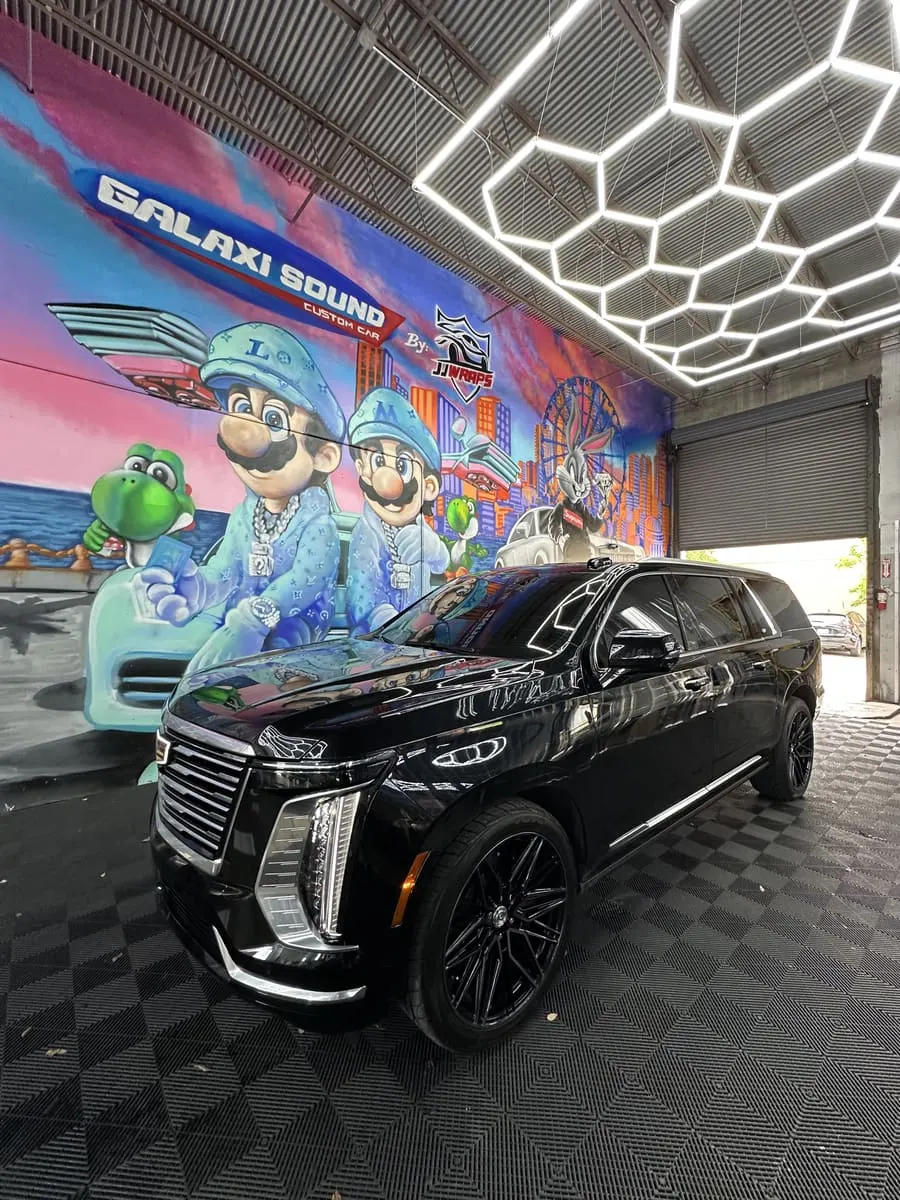
On a Miami July afternoon, the interior of a parked car can hit 150°F. Standard window tint reduces glare. Solar window tint reduces heat. Those are two very different things — and most people don't know the difference until they're sweating through a $300 film job that barely moved the needle.
At Galaxi Sound, we've been installing window tint in Kendall and across Miami-Dade for over 30 years. This guide explains the technology behind solar control film, the three numbers that actually matter, and how to choose a film that keeps your car legal and genuinely cool in South Florida's summer.
What "solar tint" actually means
The term "solar tint" gets used loosely — sometimes as a brand name, sometimes as a product category. As a product category, solar window tinting refers to any window film engineered to reject solar energy across all three of its components:
- Visible light — the glare you can see
- Infrared radiation (IR) — the heat you feel
- Ultraviolet radiation (UV) — the radiation that fades leather, cracks dashboards, and causes skin damage
Standard dyed film was designed for privacy and glare reduction. It absorbs visible light reasonably well, but it absorbs — rather than reflects or rejects — heat. That means heat soaks into the glass and slowly radiates into the cabin. Solar control film, particularly ceramic and carbon film, works differently: it uses non-metallic particles to reject infrared energy before it ever enters the car.
The practical result: your AC doesn't fight as hard, your cabin cools faster after parking, and your leather and dashboard survive Miami summers without cracking and fading.
The three numbers that actually matter
When evaluating any solar window film, there are three performance metrics you need to understand. Florida law only cares about one of them — but for Miami heat, the other two are what you actually feel.
VLT — Visible Light Transmission
VLT is the percentage of visible light that passes through the film and glass combined. Lower = darker. This is the number Florida law regulates: 28% VLT minimum on front side windows, 15% minimum on rear side windows and rear window for sedans.
VLT tells you how dark the tint looks. It does not tell you how much heat it blocks.
TSER — Total Solar Energy Rejected
TSER is the percentage of total solar energy (visible light + infrared + UV combined) that the film rejects. This is the comfort number. A film with 60% TSER means 60% of all solar energy hitting your glass never makes it inside the car.
For Miami summers, aim for 50%+ TSER at minimum. Premium ceramic films hit 65–80% TSER at legal VLT levels.
IRR — Infrared Rejection
IRR measures how effectively the film blocks infrared rays specifically — the primary driver of heat buildup inside a vehicle. Infrared makes up about 53% of solar energy. A film with 95% IRR is rejecting nearly all of the component that heats up your seats, steering wheel, and dashboard.
Dyed vs. carbon vs. ceramic solar film
There are three main film technologies available at most professional shops in Miami. Here's how they compare on the numbers that matter:
| Film Type | VLT Range | TSER (typical) | IRR (typical) | UV Block | Lifespan |
|---|---|---|---|---|---|
| Dyed (standard) | 5–50% | 30–45% | 30–50% | 99% | 3–5 years |
| Carbon | 5–50% | 45–60% | 55–70% | 99% | 7–10 years |
| Ceramic | 15–70% | 55–80% | 85–99% | 99% | 10–15 years |
Dyed film is the entry-level option. It absorbs solar energy into the film, which then re-radiates some heat into the cabin. Adequate for glare and basic privacy. Not the right tool for Miami heat.
Carbon film uses carbon particles that reject infrared more effectively than dye. Noticeably cooler than dyed at the same VLT. No signal interference (unlike older metallized films). Good mid-range option.
Ceramic film is the performance tier. Nano-ceramic particles achieve the highest IRR ratings — often 90–99% — without requiring a dark VLT to do it. A ceramic film at a legal 35% VLT on your front windows can reject more heat than a dyed film at 5%. It's also the most stable: ceramic doesn't fade, bubble, or turn purple with age the way cheap dyed film does.
What stays legal in Florida
Florida's tint law (Statutes §316.2953 and §316.2954) sets minimum VLT requirements — the darkest you can legally go on each window. Solar film is no exception: the law applies regardless of how a film is marketed.
| Window | Sedan / Coupe | SUV / Van / Truck |
|---|---|---|
| Front side windows | 28% VLT minimum | 28% VLT minimum |
| Back side windows | 15% VLT minimum | 6% VLT minimum |
| Rear window | 15% VLT minimum | 6% VLT minimum |
| Windshield | Non-reflective strip above AS-1 line only | Same |
The good news for heat: you don't need to go dark to win on TSER. A ceramic film at 35% VLT on front windows (safely above the 28% legal minimum even accounting for factory glass) can deliver 65%+ TSER. If you drive an SUV or truck, the rear can legally go down to 6% combined (15% on sedans) — pair a dark ceramic rear that meters above that floor with a legal 35% ceramic front and you get maximum heat rejection across the whole vehicle.
For the full legal breakdown including medical exemptions and certification requirements, see our Florida Window Tint Law guide.
Real-world heat reduction in a Miami car
Numbers on a spec sheet don't always translate clearly to the experience of getting into a parked car. Here's what the research and our customer feedback consistently shows:
A car parked in full Miami sun for two hours can reach 140–160°F interior temperature. Window film alone won't prevent heat entirely — but it changes the experience significantly:
- No tint: Cabin hits 150°F+, leather is uncomfortable to touch, steering wheel painful to hold
- Dyed film (35% VLT, ~40% TSER): Cabin peaks around 130–135°F — a noticeable improvement, especially on the seat surfaces
- Ceramic film (35% VLT, ~70% TSER): Cabin peaks around 110–120°F — significant difference, AC brings it down in 3–5 minutes vs. 10+
Beyond parked temperatures, the driving experience changes: your AC system works less to maintain a set temperature, which improves fuel efficiency and reduces engine load. Studies from national labs have shown that high-TSER window film can reduce AC fuel consumption by 2–8% on vehicles with efficient window coverage.
UV protection is consistent across all quality films — most professional-grade films, including dyed, carbon, and ceramic, block 99% of UV radiation. This is critical in Miami for both occupant health (skin cancer risk from UV-A through glass) and interior preservation.
What solar window tinting costs in Miami
Pricing in Miami varies by shop, film brand, and vehicle size. As a general guide:
| Film Type | Typical Full-Car Price (Miami) |
|---|---|
| Dyed solar film | $150–$250 |
| Carbon solar film | $250–$400 |
| Ceramic solar film | $350–$600 |
What you pay for is the film technology — higher-TSER films cost more because the materials are more expensive to manufacture. The installation labor is comparable across film types.
Ready to book? See our window tinting service page or contact us to get a quote.
Frequently asked questions
What is solar window tinting for cars? Solar window tinting refers to film engineered to reject solar energy — infrared heat, UV, and visible light — not just glare. Ceramic and carbon films use non-metallic particles to reject heat before it enters the cabin, unlike standard dyed film that primarily absorbs visible light.
Does solar tint actually keep your car cooler in Miami? Yes — but film technology matters more than shade. A ceramic film at 35% VLT can reject 65–70% of total solar energy, dropping cabin temperatures by 15–25°F. A dyed film at the same VLT might reject 35–40%. Darker does not automatically mean cooler.
What's the difference between VLT, TSER, and IRR? VLT (Visible Light Transmission) is the legal number — how dark the film looks. TSER (Total Solar Energy Rejected) is the comfort number — how much total solar heat is blocked. IRR (Infrared Rejection) targets heat specifically. For Miami, focus on TSER and IRR when choosing film; VLT is only about legal compliance.
What VLT can I run in Miami and still block heat legally? Florida requires 28% VLT minimum on front side windows. A ceramic film at 35% VLT (giving a combined ~30–32% with factory glass) stays legal while delivering serious heat rejection. Behind the driver the minimum is 15% on sedans and 6% on SUVs, vans and trucks — a dark ceramic rear that meters above those floors plus a 35% ceramic front is the heat-maximizing legal setup in Miami.
Is ceramic tint the same as solar tint? Ceramic is the premium tier of solar control film. "Solar tint" is a broad term — it can refer to dyed, carbon, or ceramic film marketed for heat rejection. Ceramic delivers the highest IRR (often 95%+) at any VLT level, making it the best option for Miami heat. See our window tinting service page for the brands we carry.
How much does solar window tinting cost in Miami? Dyed solar film: $150–$250. Carbon: $250–$400. Ceramic: $350–$600. Pricing varies by vehicle size and film brand. At Galaxi Sound, we'll tell you exactly which film suits your budget and heat goals before any installation begins.
Does Galaxi Sound install solar window tinting? Yes. We've been installing window tint in Kendall and Miami-Dade for over 30 years. Ceramic, carbon, and dyed solar film available. Every install is measured before you leave — no guessing whether you passed the VLT legal threshold. Certification sticker always included.
Need the full legal breakdown for Florida tint? See our Florida Window Tint Law guide. Ready to book? Visit our window tinting service page or contact us directly.