Plain-language notes on every item in the work list — what it is, why it is done, and what to know before doing the same on your car.
Vinyl wrap
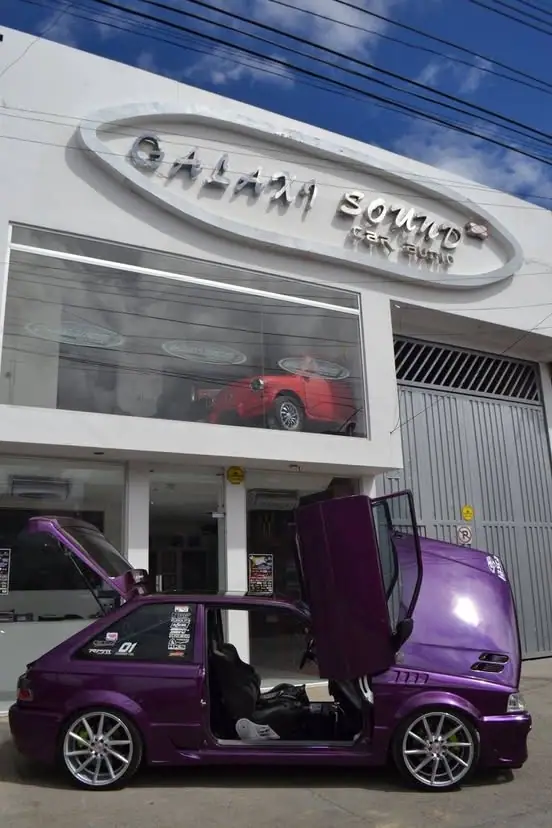
A vinyl wrap changes a car's color or adds graphics without repainting. Brand demo cars use it to carry the manufacturer's colors, and it can be removed later; while it's on, it shields the paint underneath from sun and light scratches. Quality comes down to surface prep, clean edges and seams, and post-heating the film so it holds its shape in the Miami heat.
Car wraps in Miami → Custom subwoofer enclosures
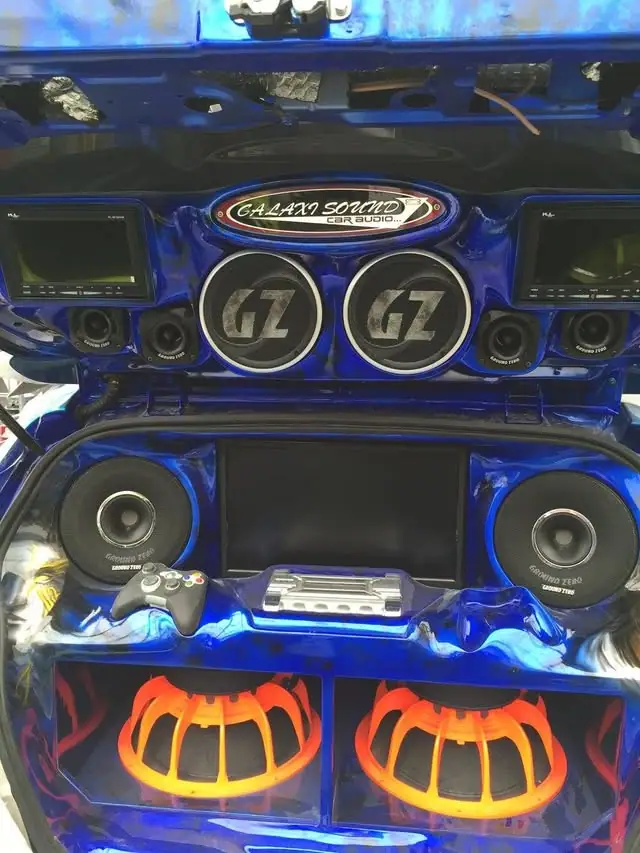
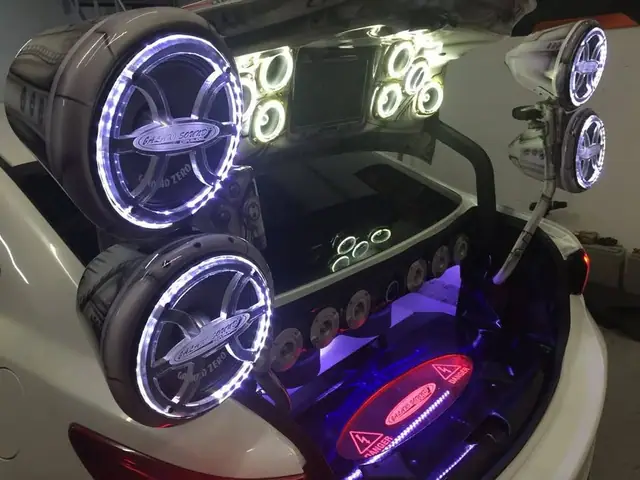
A subwoofer only performs as well as the box it's in. A custom enclosure is built to the internal volume the driver needs, then shaped to the space the car actually has — trunk floor, side walls, rear deck or cabin. Fiberglass lets the box follow curves no flat MDF panel can, which is why show builds lean on it. On a daily driver the same skills can go the other way: a stealth box that hides the sub and keeps the trunk usable.
Subwoofer & enclosure installs → Subwoofers
Subwoofers reproduce the lowest notes — generally below about 80–100 Hz, where regular door speakers can't move enough air. Running several subs, as show and SPL cars often do, raises output, but each one also needs amplifier power, enclosure volume and electrical capacity to match. For most daily drivers, one or two well-chosen subs in the right enclosure give deep, clean bass without giving up the trunk.
How to choose a car audio system → Amplifiers and amp racks
Amplifiers turn the small signal from the head unit into the power speakers and subwoofers need. A mono amplifier usually drives the subs, while a multi-channel amp powers the door and dash speakers. In a trunk install or amp rack, placement matters: amps need airflow to stay cool, a solid mount, short and properly fused power runs, and gains set with a meter so the speakers get clean power instead of distortion.
Amplifier installation → Engine bay dress-up
On a show car the hood is open as often as the doors, so the engine bay gets the same attention as the interior. Dress-up work usually starts with a deep clean and degreasing, then adds color-matched covers, painted or polished parts, and tidy wiring and hoses. Anything added has to tolerate heat, stay clear of moving parts and leave routine maintenance easy.
Car & engine bay detailing → Custom interior and trim panels
Custom interior panels tie the audio system to the rest of the car. They are usually shaped from MDF or fiberglass, then wrapped in vinyl or fabric, or painted to match the build's color scheme. Beyond looks, they give speakers, displays and controls a clean place to live and hide the wiring behind them. The key is fit: panels have to line up with the factory trim and stay quiet on rough roads.
Custom car audio installs →